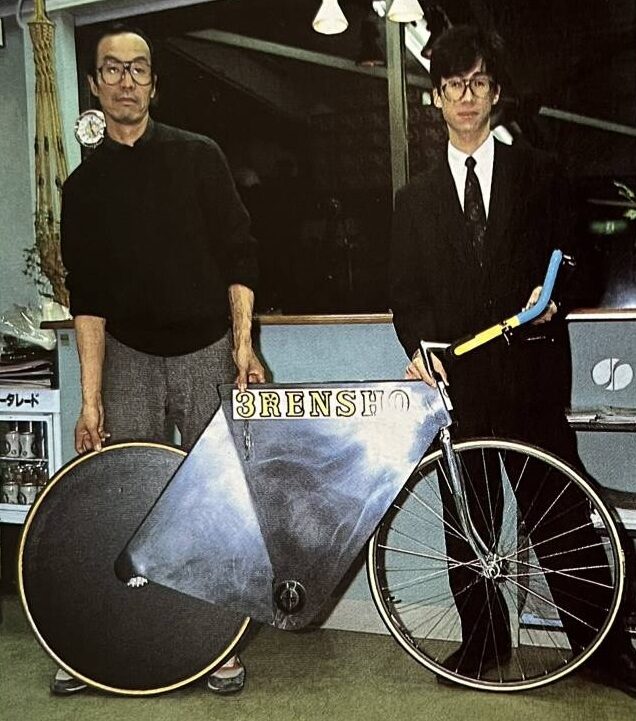
Mystery 3Rensho Carbo-Panel Prototype

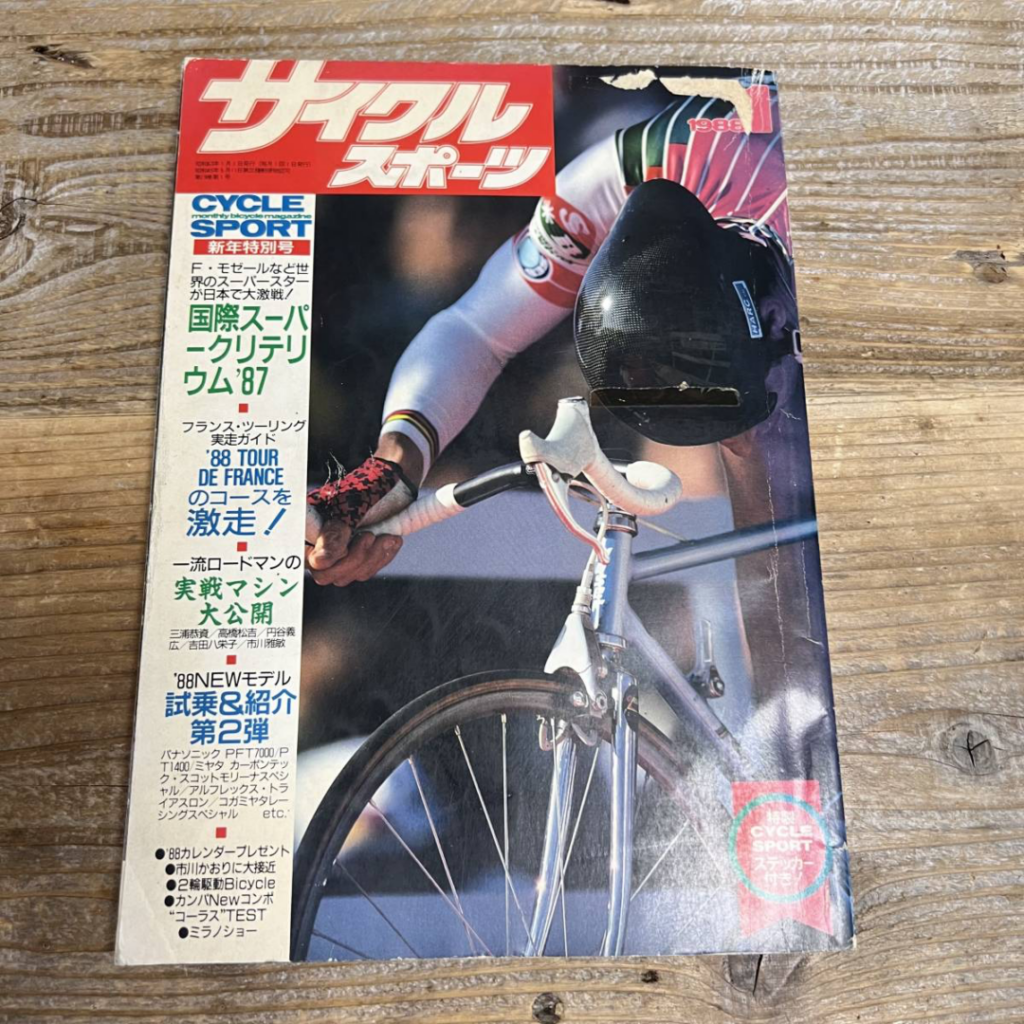
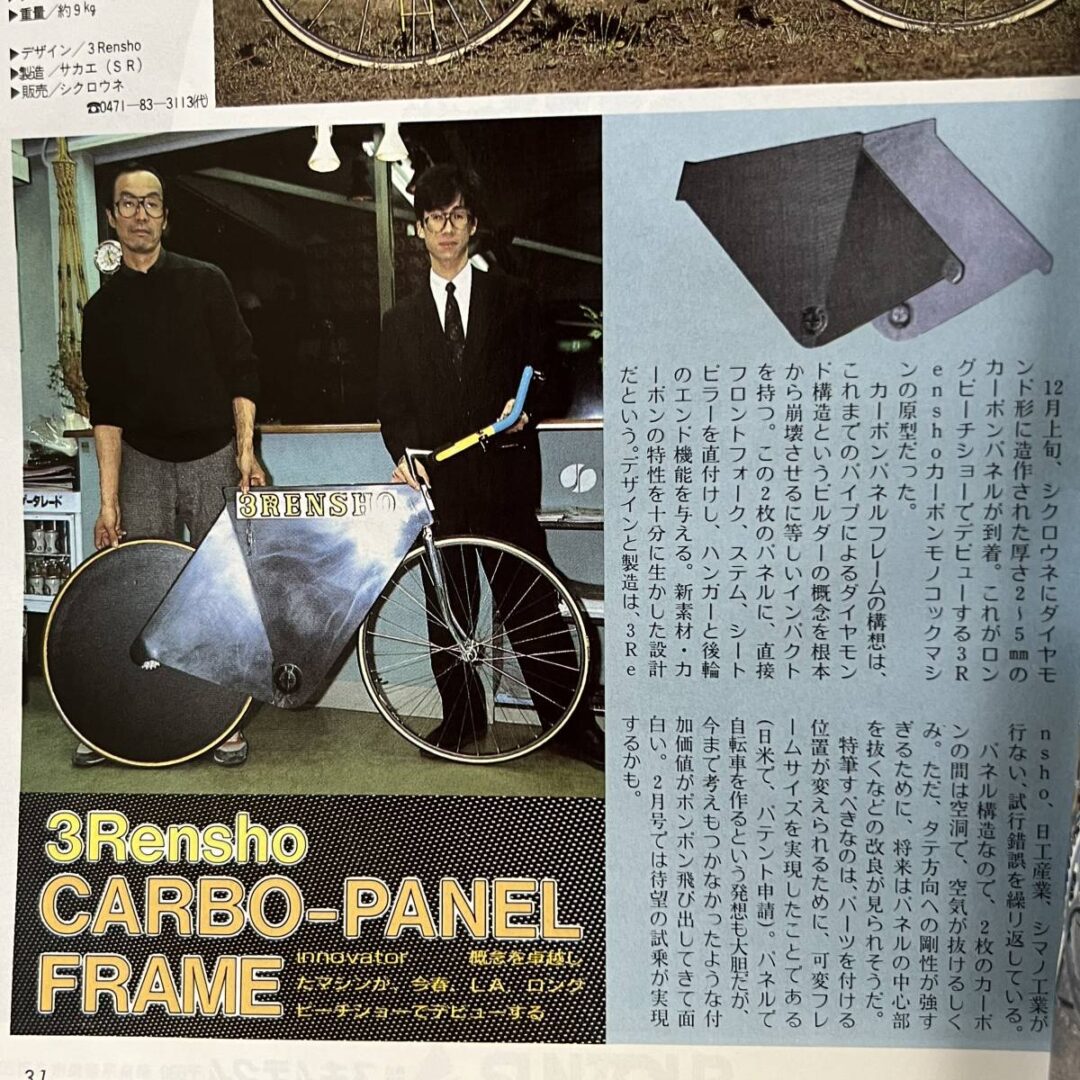
A few years ago, I came across this scan from the January 1988 issue of “Cycle Sports,” a Japanese cycling magazine.  Within a longer article about 3Rensho aluminum road bikes is a feature on a prototype carbon frame called the “Carbo-Panel.”  Designed by 3Rensho and manufactured in partnership with Nikko Sangyo and Shimano, it featured a unique design consisting of two carbon panels (2-5mm thick) that form the frame of the bike.
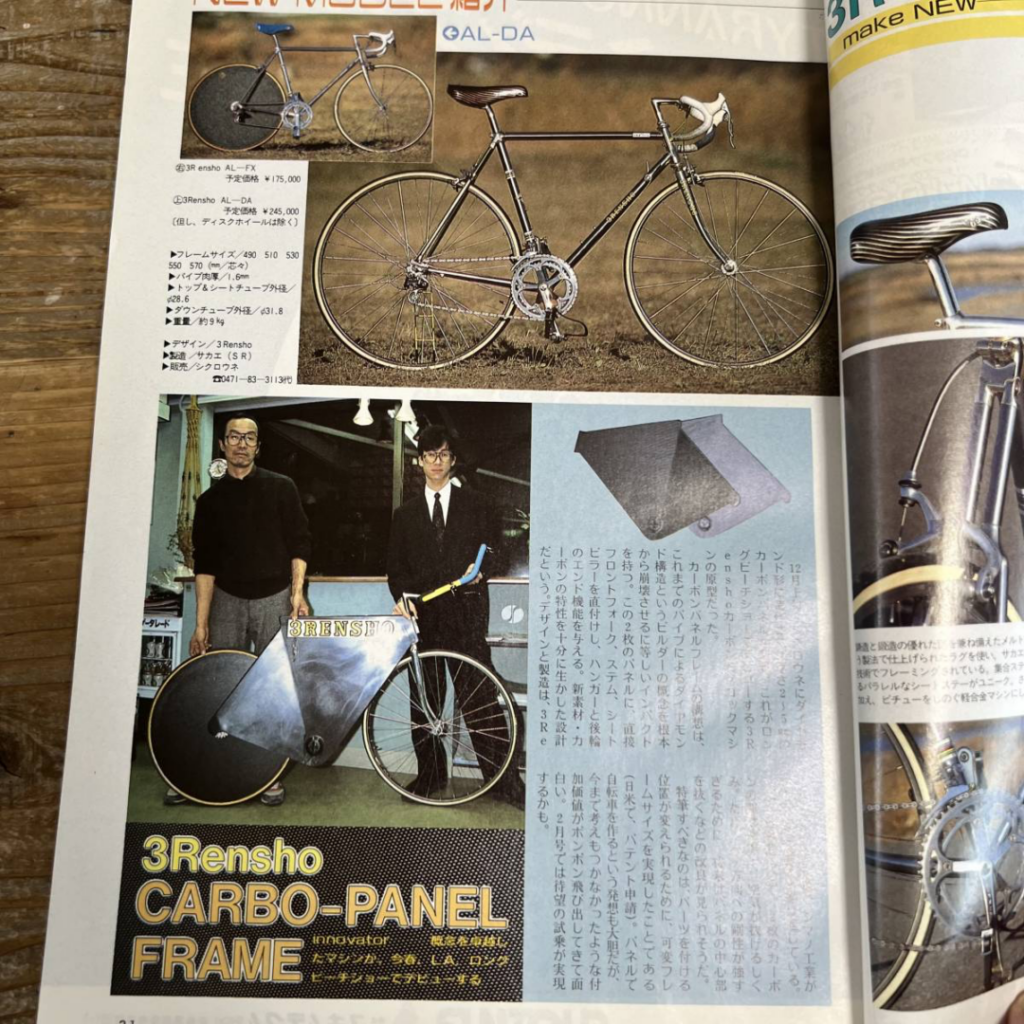
 

At the time this was written, most of the carbon frames on the market used tubes that were chemically bonded together.  The Carbo-Panel no underlying frame structure and is hollow inside, with the panels functioning as the frame.

Components like the fork and seat post are mounted directly to these panels.  The article notes that the frame can be adapted to fit riders of different sizes based on where the components are mounted.

The article goes on to point out that this is a prototype, complaining that “rigidity in the vertical direction is too strong,” and suggesting that it could be improved by adding a cut out to the central part of the panel.  Around the same time this article was published, the prototype was being displayed at the 1988 World Cycle Fair in Long Beach, California. The author goes on to say they look forward to a test ride, which will be written about in the February issue.  I don’t have a copy of that review, but in April 1988, a complete Carbo-Panel made the cover of the Japanese cycling magazine “New Cycling“:
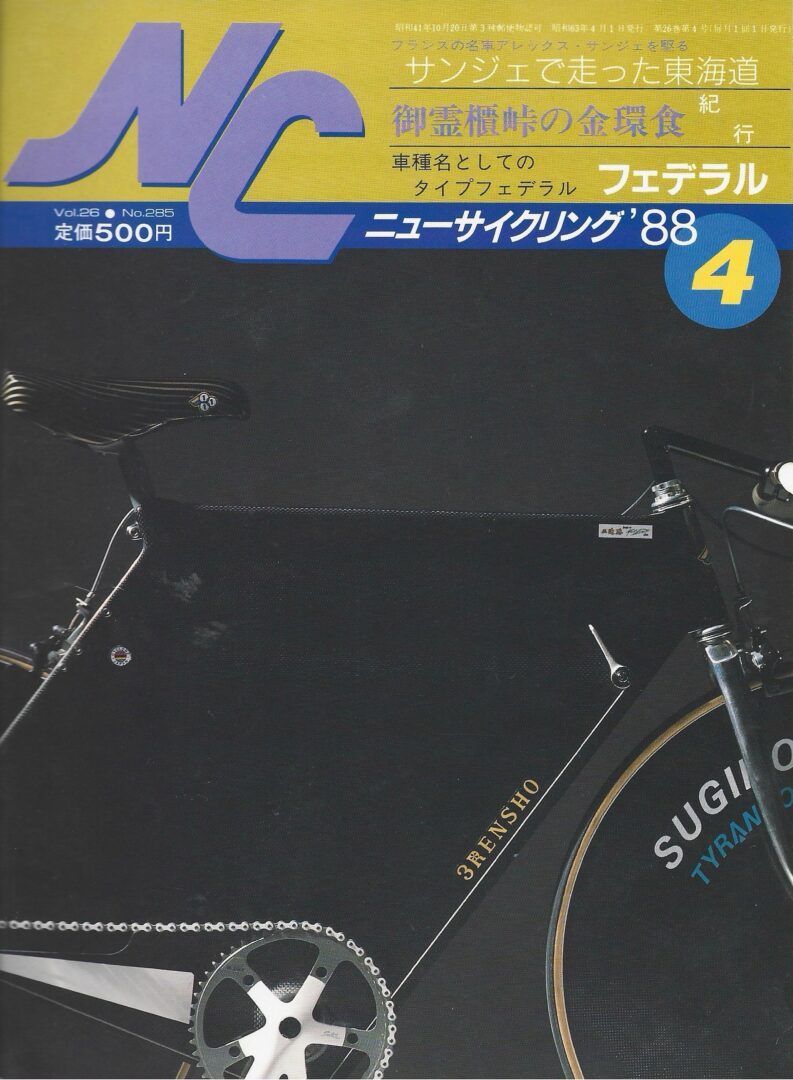
Google translated from the original Japanese, the Editor’s note states:

“It is self-evident that when an object’s material changes, it naturally has certain material properties, and its shape changes accordingly.  Bicycles, which have entered an era of new materials, are no exception.  I just so happens that in this day and age, new materials are being handled, discussed, and made within the expanding field of steel production.  In the future, if bicycles made from new materials, including their parts, are conceived and made in a completely different dimension from steel, they will undoubtably be called “new material bicycles” in both name and reality.”

I hope to find more about this carbon prototype in the future, including any ride reviews, if they exist.  In the process of researching this bike, I came across a collaboration between pioneering American carbon bike designer Brent Trimble and Zunow.  My next article will be all about it.
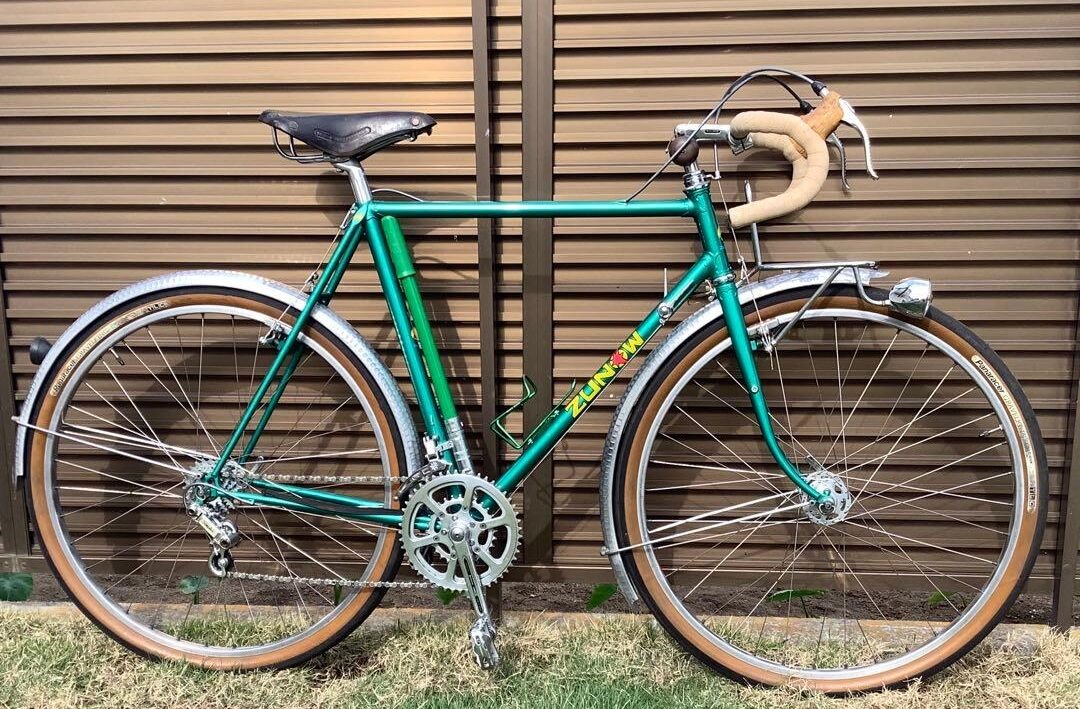
More Lovely Zunow 650B Randonneur Bikes

The best deals are always “local pick-up only.” I saw this Zunow “Nuovo Touring” randonneur bike for sale on Japan’s Mercari marketplace last month.  It sold for around $1000 USD and a trip to Atsugi City.  Quite a steal, if you live locally.  Collectors around the world know that you have to travel to get the best deals. I downloaded the photos from the listing and am sharing them here to show off a “vintage correct” build for one of these iconic bikes.

Over a decade ago, I decided that I prefer “brifter” (brake + shifter) controls over down-tube or bar-end shifters.  With a few exceptions, my restorations have moved towards “neo-retro” builds that use modern parts, tastefully chosen to maintain a vintage look.  Here’s what my Zunow Randonneur looked like before I switched the components to Campagnolo.  This particular Zunow looks much like it did when brand new in the late 1970s, with the exception of modern SPD pedals.  Read on for more photos and details!

Continue reading

Zunow KYGM Randonneur Restored

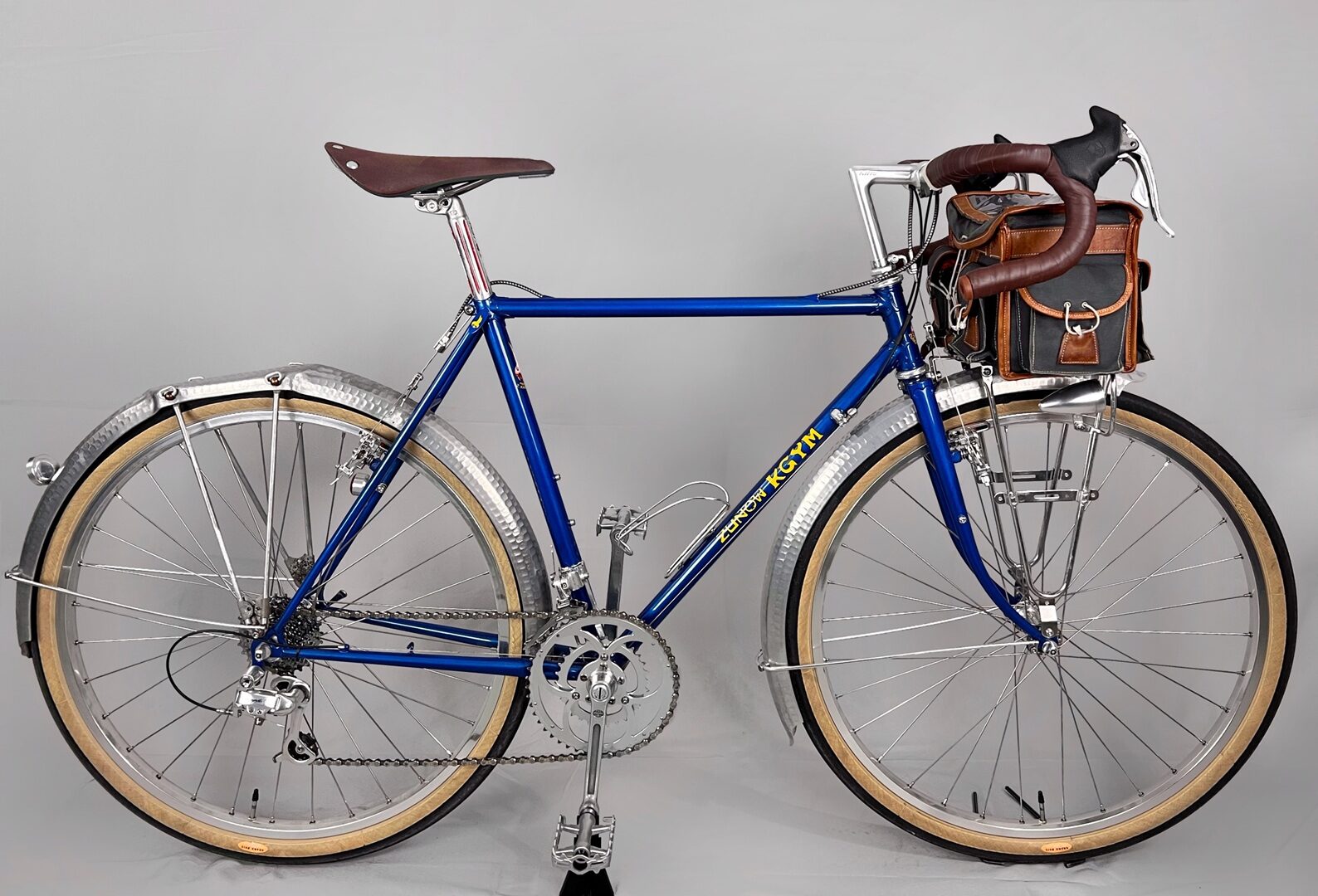
I’ve been long overdue in sharing this restoration of my wife’s Zunow KYGM randonneur bike.  Originally acquired via Yahoo Japan auctions in 2020, it is a sibling of my own Zunow randonneur bike and an example of Kageyama-san’s early full-custom work.  Dating from the early 1970s, it is in the style of classic French randonneur bicycles, complete with Nervex lugs, 650B wheels, and Gilles Berthoud handlebar bag.  I wrote about the bike and its history in detail in this article from 2022.

After the initial build was complete, the plan was to put a few hundred miles on it to confirm it fit before kicking off a restoration.  She loved riding it so much that two years passed by quickly.

As 2024 rolled around, I promised myself that I would have it ready for her birthday in February.  That winter, I had it professionally repainted in a beautiful dark blue sparkle with yellow accents.  After the new paint, I began the rebuild, with help from Dave Perry at BikeCult.  Dave did a great job building the wheels and installing the fenders. Read on for all the details and a gallery of photos!

Continue reading

Adventures in eTap: Trusty Rusty goes wireless

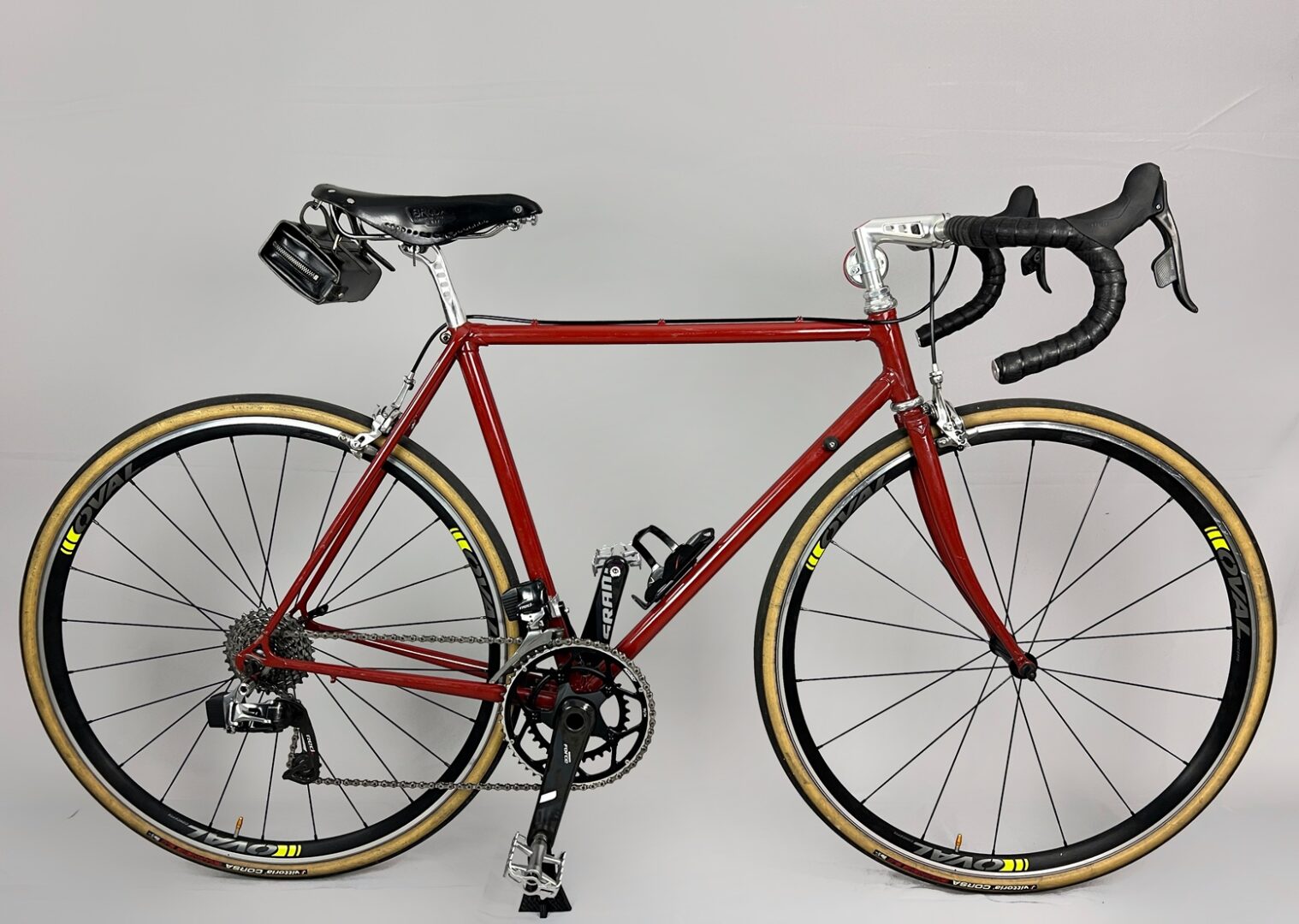
Ten years later, the second frame I ever built is still going strong.  I gave it to my wife when we first started dating, and she named it “Trusty Rusty” for its ketchup-red color.  Since then she has put countless miles on ol’ Rusty.  As an inveterate bike bodger, over time I swapped out the original build of silver SRAM Rival 10-speed for a Campagnolo Centaur compact group set.  I also added a Modolo Q-Race stem and a matching seat post, both featuring some cool “speed holes.”

After a few years of that, I pounced on a gently used SRAM Red eTap 11-speed group set that came up for sale.  Ironically, it came out around the time I first built this bike. This was the first electronic shifting group either myself or my wife had used, and we were both skeptical.  After a couple of long rides, however, my wife reported back that it was the best-performing group she’d ever ridden.  Check out the rest of the build details and more photos after the jump.

Continue reading

LOOK 496 Single Speed Project

LOOK KG 496

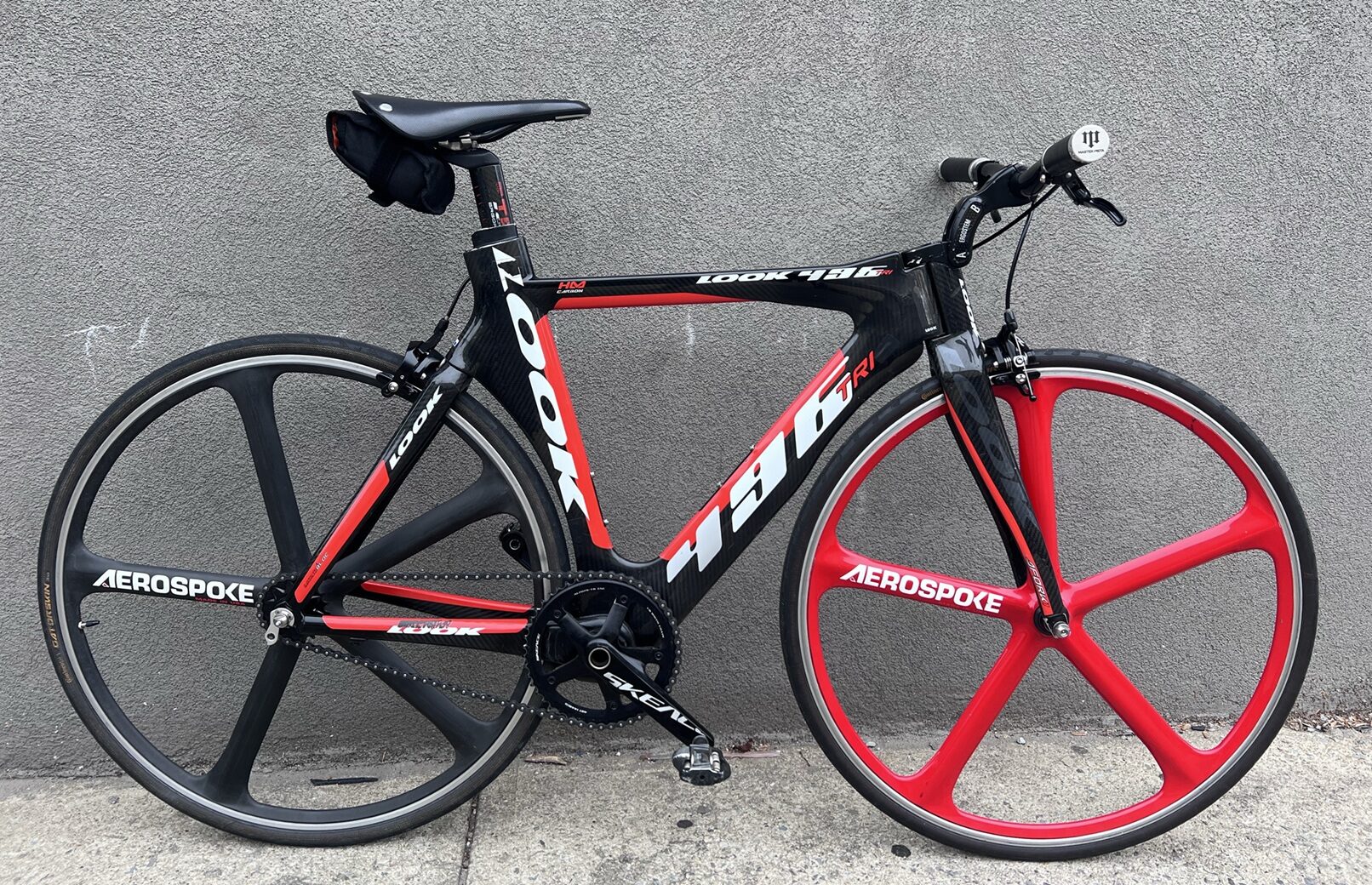
Introduced in the year 2004 for the French Olympic track cycling team, the iconic LOOK KG 496 represented the finest in carbon frames for the next decade.  Over twenty years later, it remains a rare, highly-coveted bike.  I never thought I’d own one, but then I came across a frame set at the 2025 Westminster bike swap for pocket change.  I had no idea what I’d do with it, but it wasn’t the kind of deal you pass up.

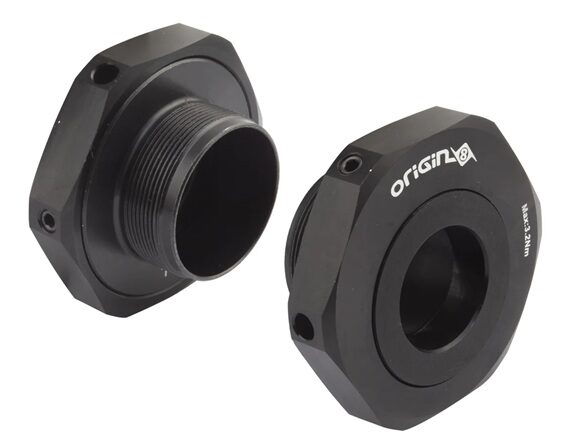
Sharp-eyed readers will have immediately recognized that this is not the track version of the KG 496.  It’s the triathlon version, complete with derailleur hanger.  It sat on my wall for a few months until I discovered the Origin8 Revolvr eccentric bottom bracket.  This is an eccentric bottom bracket that is compatible with standard 68mm English-threaded bottom bracket shells and GXP cranks.  It allows you to turn bikes with vertical drop-outs into single-speeds.  Instead of using an external chain tensioner, the eccentric bottom bracket tensions the chain by moving the crankset forward to take up any slack. With this nifty gadget in hand, I ordered some new parts and got to work on a fun spring project.  Read on for more photos and build details… Continue reading

Vogue X Cycle Aki Road Bike with Suntour Superbe

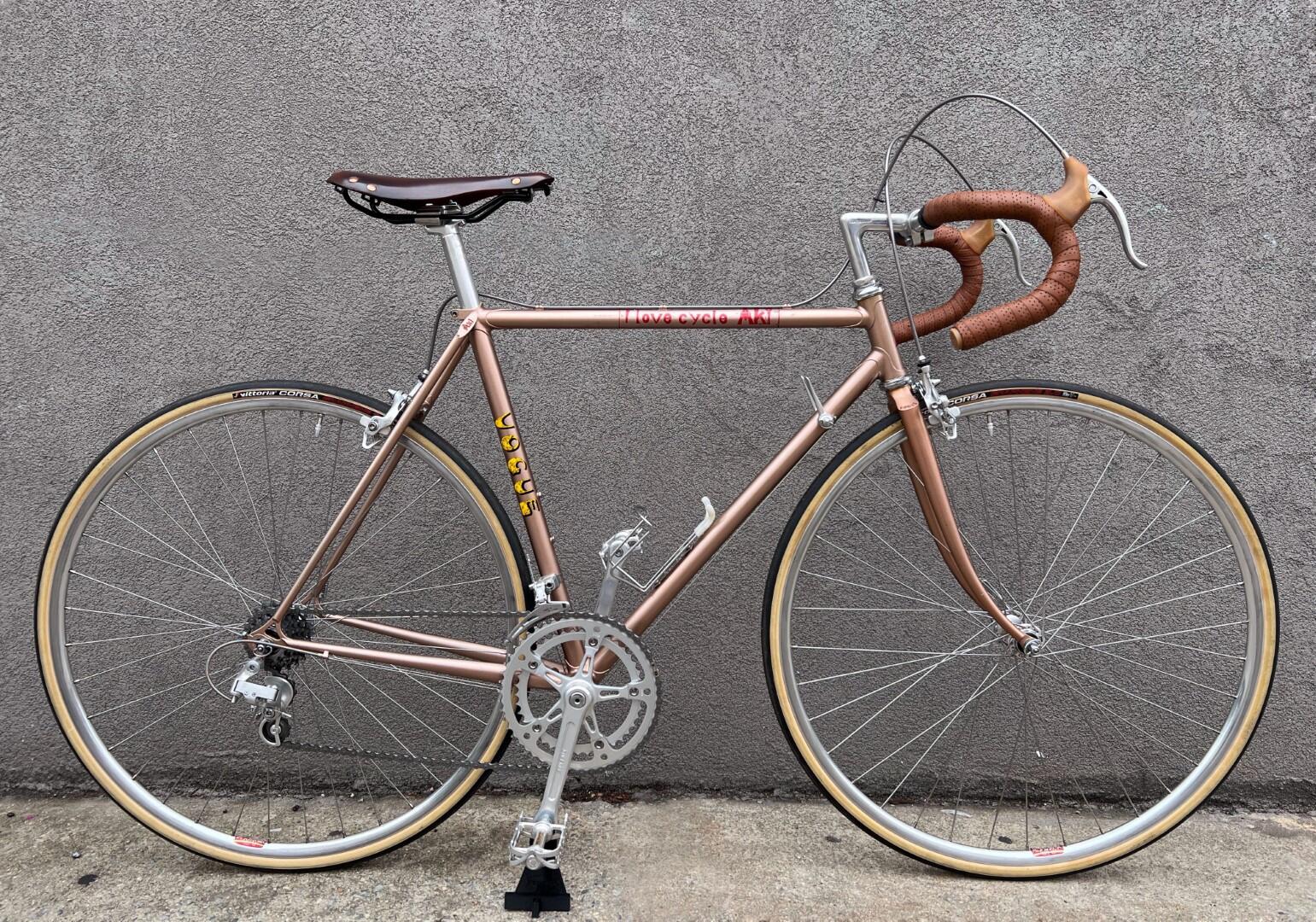
The latest vintage restoration from my shop is this stunning Vogue road bike, built up with its original Suntour Superbe components.  It was a surprise find on Yahoo Japan Auctions, sold complete except for wheels and cranks. It was coated in layers of grease, grime and dust.  Once I removed the parts and began to clean the frame, a masterpiece of a bicycle came into focus.

Vogue is a true connoisseur’s brand, rarely seen outside of Japan.  In the USA, the marque is more often associated with Keirin track bikes.  Road versions of Vogue bicycles are very rare. This particular one is a collaboration between Vogue and a Japanese bicycle store called “I Love Cycle Aki” which had a contract with Oriental Kogyo (“Industries”), the formal name for the frame builder behind Vogue, Hiroshi Takahira. Takahira-San made these bikes as one-off customs for Aki customers. It has Vogue and Aki engravings on the seat stays and fork crown.  Read on to learn all about Vogue and this bike! Continue reading

Nagasawa Special NJS Track with Suntour Superbe Pro

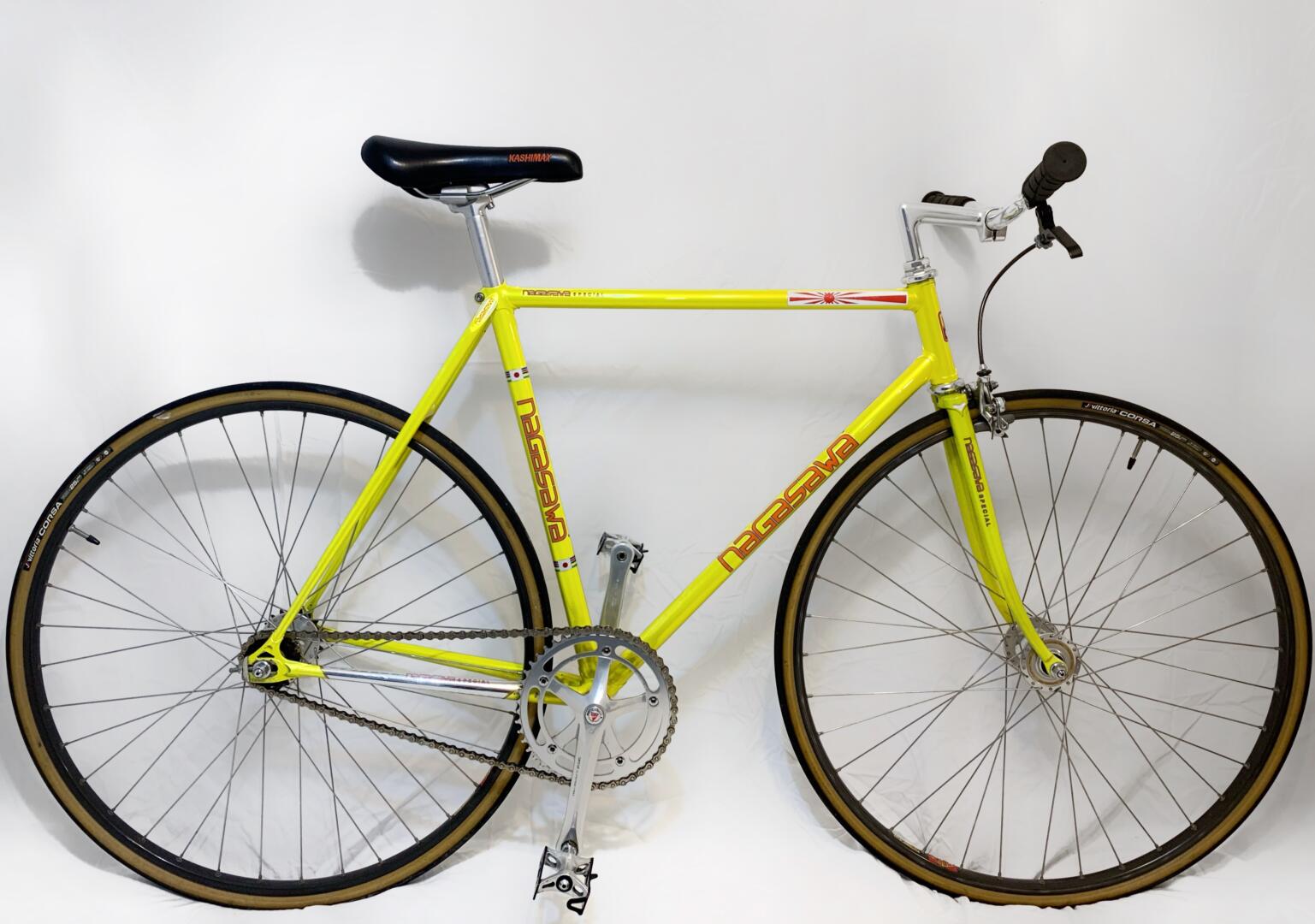
In December of 2021 I wrote about a Nagasawa track bike I restored.  It was actually my second Nagasawa; this article is about my first one.  I acquired it in early 2017 as a lucky eBay find; only $800 complete!  Based on the serial number, it was made in 1984, and I think it had been repainted at least once in its life, since the paint was in excellent condition.  It was built up with cheap parts which I quickly discarded, opting instead for an all-Suntour Superbe Pro track build.  I also had an additional challenge: I don’t ride brakeless fixed in the streets, but I also did not want to defile one of Nagasawa-san’s forks by drilling it for a brake.  Instead, I purchased a fork from a different NJS bike that had already been drilled, and which used the same fork crown and dropouts as the Nagasawa.  I acquired new decals and sent it off to Allan Wanta, who did a marvelous job matching the pearlescent yellow paint of the original.  Read on for more info on the build, plus a cool interview with Nagasawa-san from 1983! Continue reading