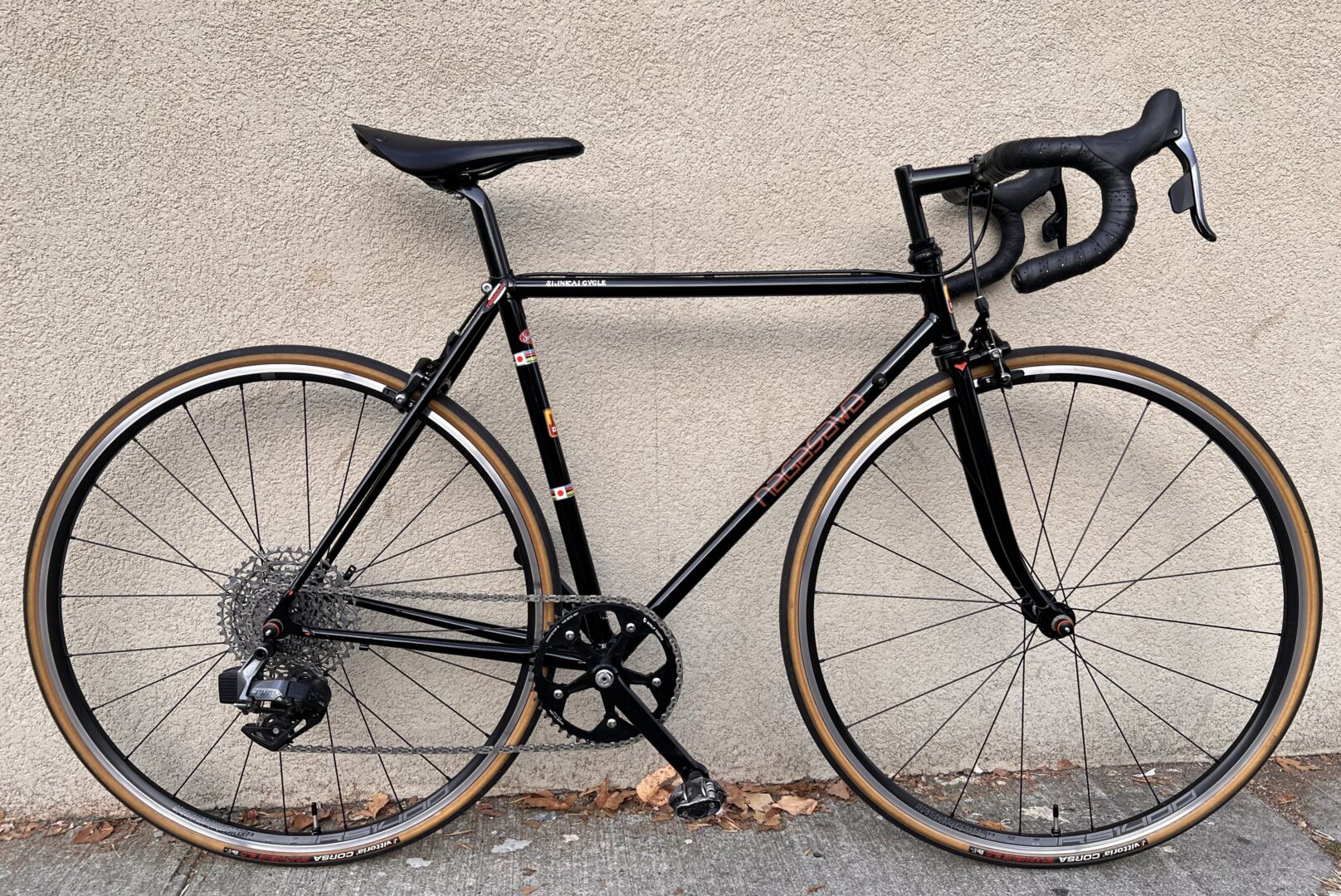
Nagasawa Nuevo Retro Road Bike Build

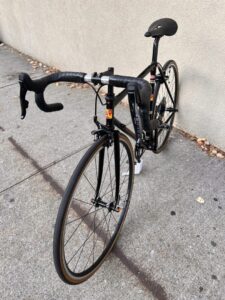
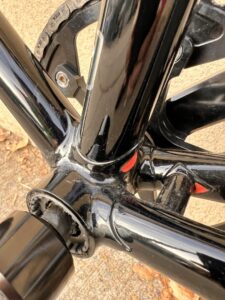
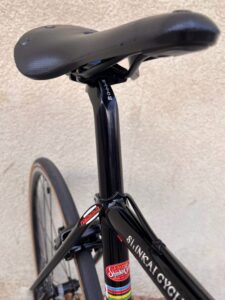
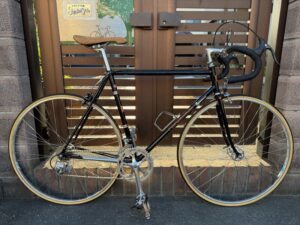
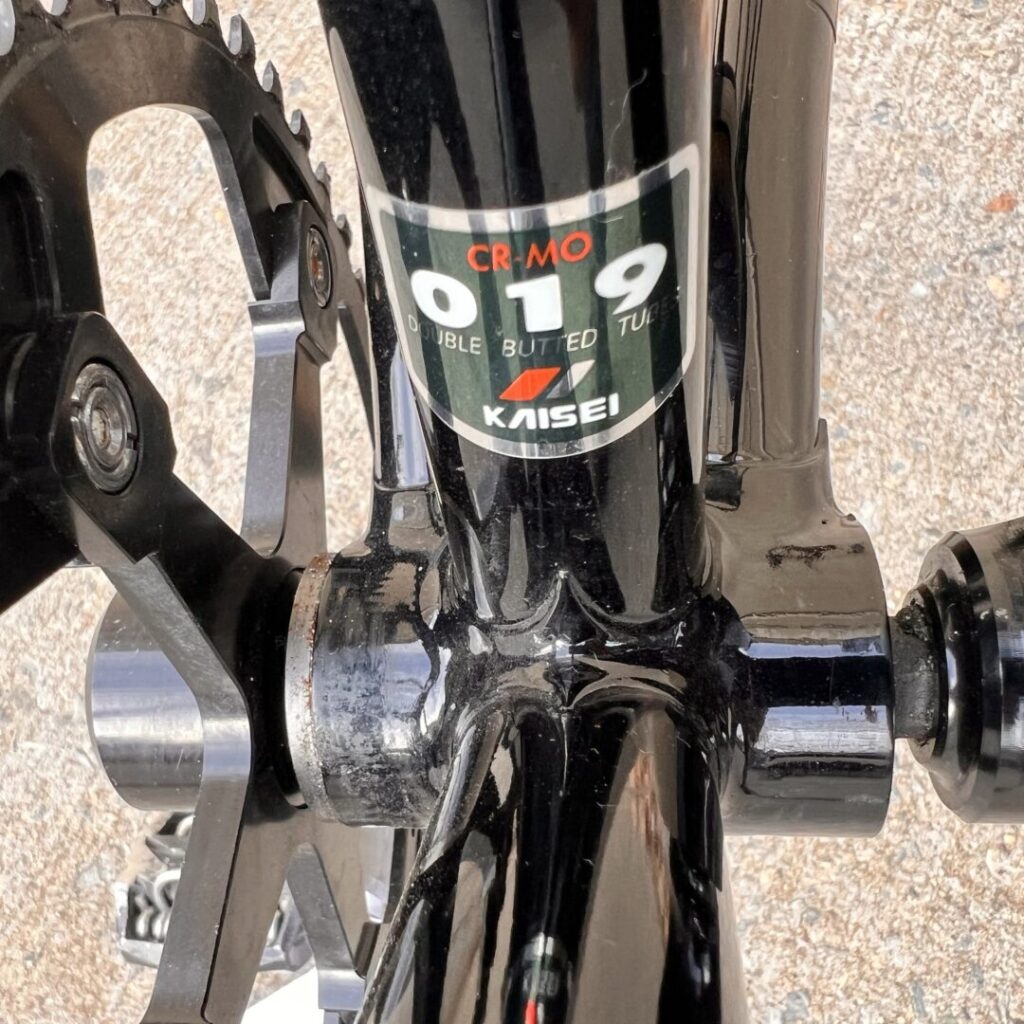
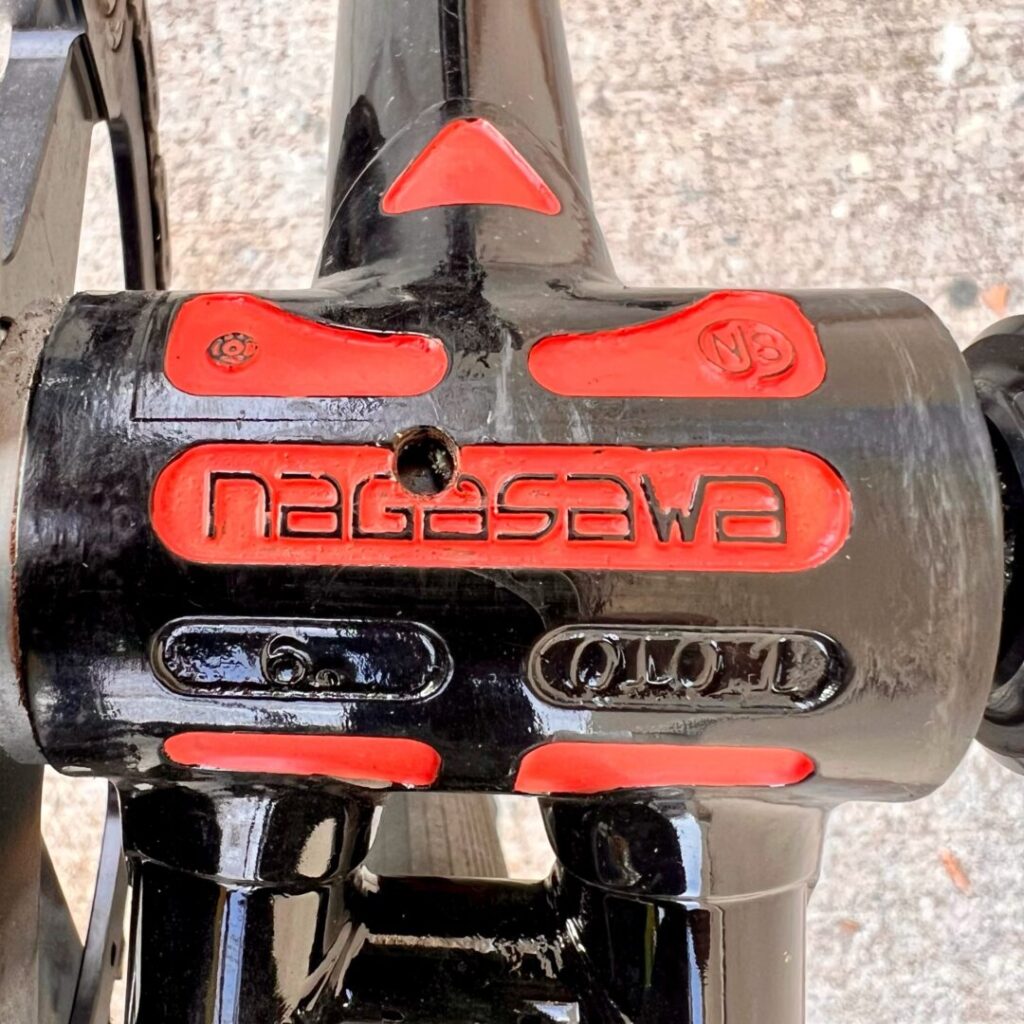
Another “bucket list bike,” I bought & imported this Nagasawa road earlier this year, after over a decade of searching for one in my size.  Nagasawa road bikes are exceedingly rare, far more so than his exquisite keirin machines.  It’s not as surprising, then, that this one was originally a NJS track bike, used in professional keirin races. It still has the NJS stamp on the bottom bracket. It was later converted into a street-legal road bike by Nagasawa, so that the keirin rider could use it as a training bike.
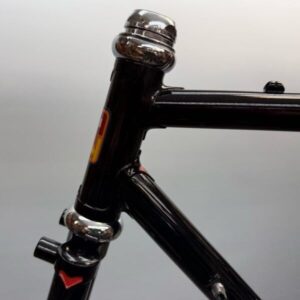
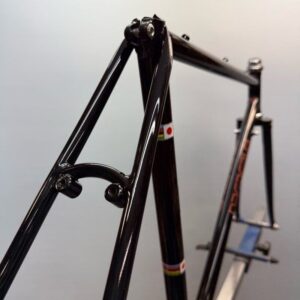
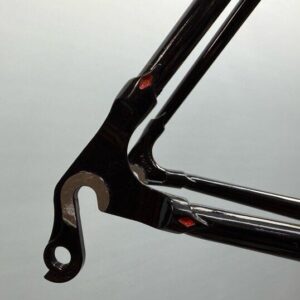
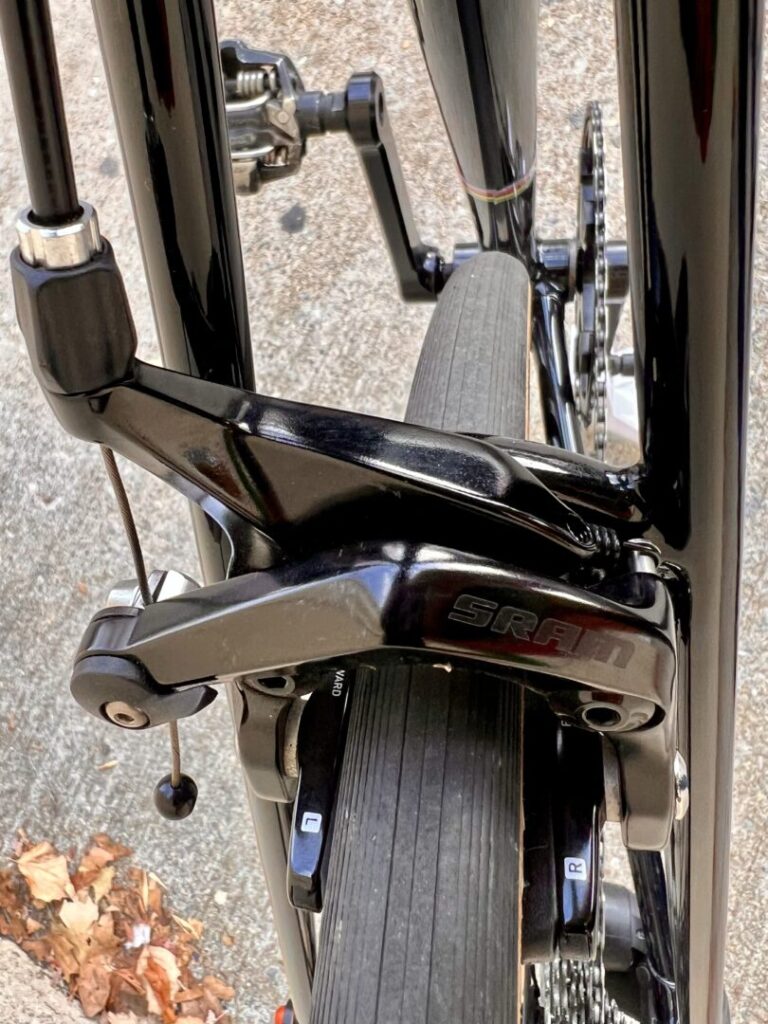
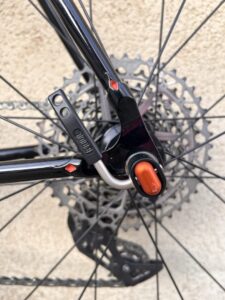
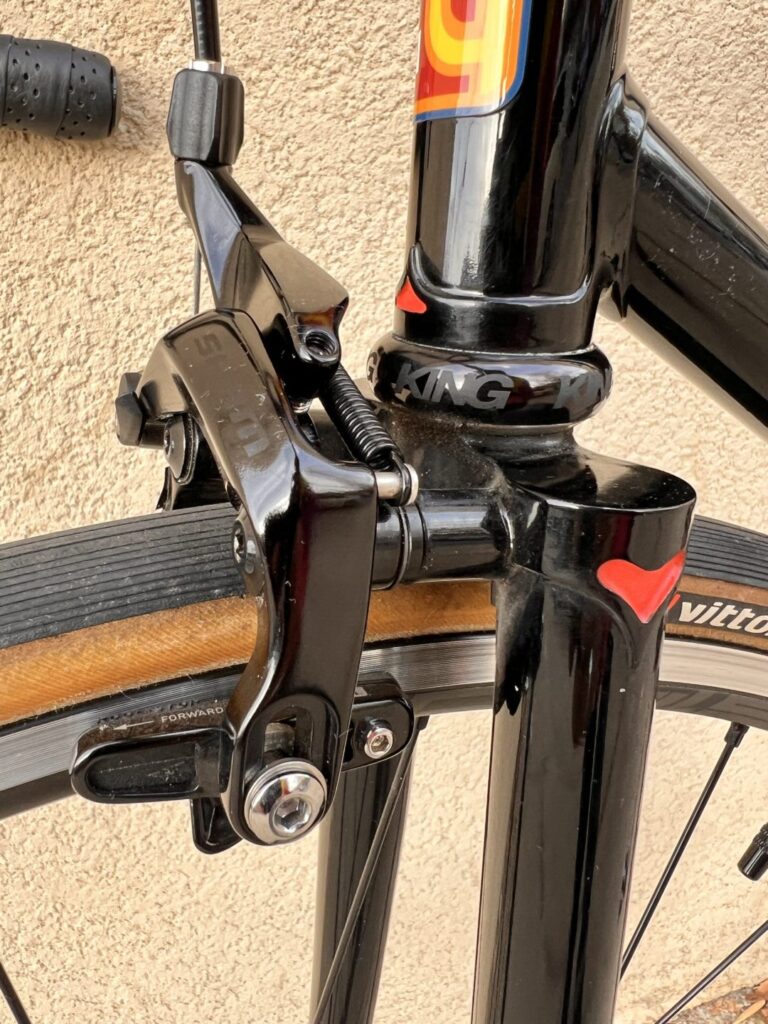
I believe the conversion was done fairly recently; i.e. in the last decade. This is because instead of drilling the frame for brakes, Nagasawa brazed in modern direct-mount brake posts to the fork crown and seat stay bridge. Direct-mount brakes of this type appeared around 2013, so I doubt the conversion happened prior to that. It’s a genius way to convert a track bike, since direct-mount brakes are superior to other rim brakes and doesn’t involve drilling new holes in the frame. The rear track dropouts were replaced with a set of Ritchey vertical dropouts.

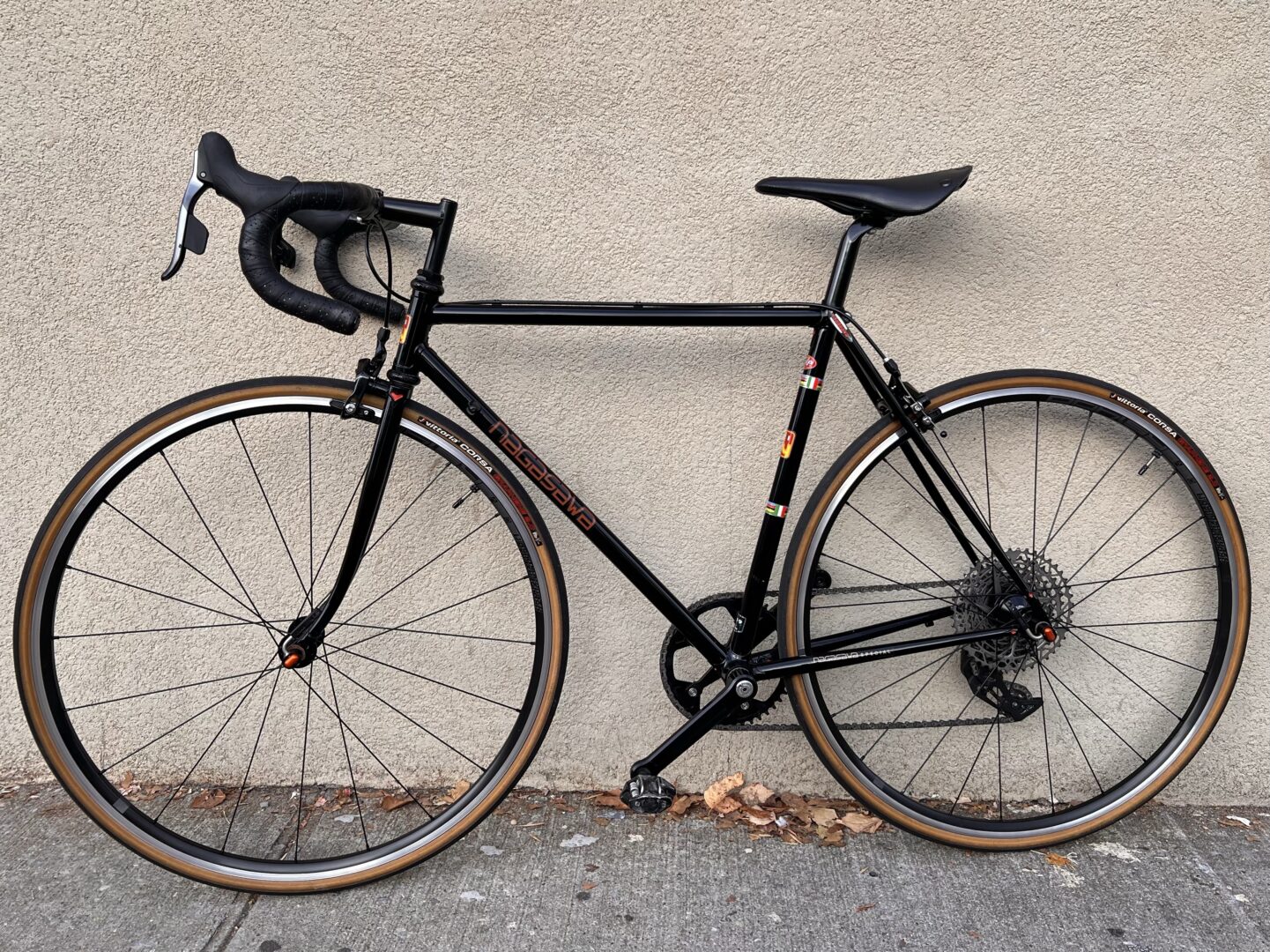
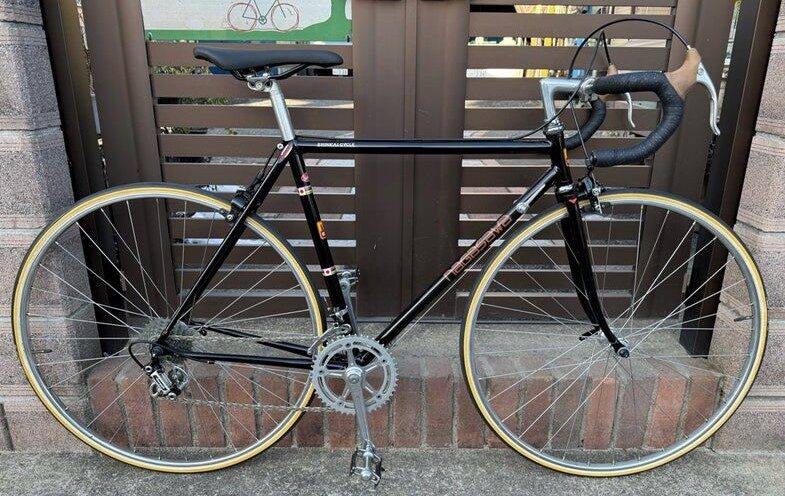
It was restored by Shinkai Cycle in Osaka with new paint and arrived with a mostly-vintage build consisting of Campagnolo Nuovo and Super Record parts, a tubular wheelset and Shimano 105 brakes:
Shinkai Cycle: https://ameblo.jp/bicyclu527/entry-12956094768.html

Looking through Shinkai Cycle’s archives, there are two other Nagasawa road bikes that look very similar.  Assuming Shinkai painted them all, they also have the same Ritchey vertical socket-style dropouts used to convert them from track frames.  It appears mine is the only example with direct-mount brakes front and back; these other two have forks with direct-mounts but their seat stays are drilled for a typical rim brake. I’m glad my bike uses the same mount fore & aft; having two different brake types offends my sense of aesthetics.  You can read more about each of these bikes on Shinkai Cycle’s website by clicking on the images below:
Click here to read about this bike

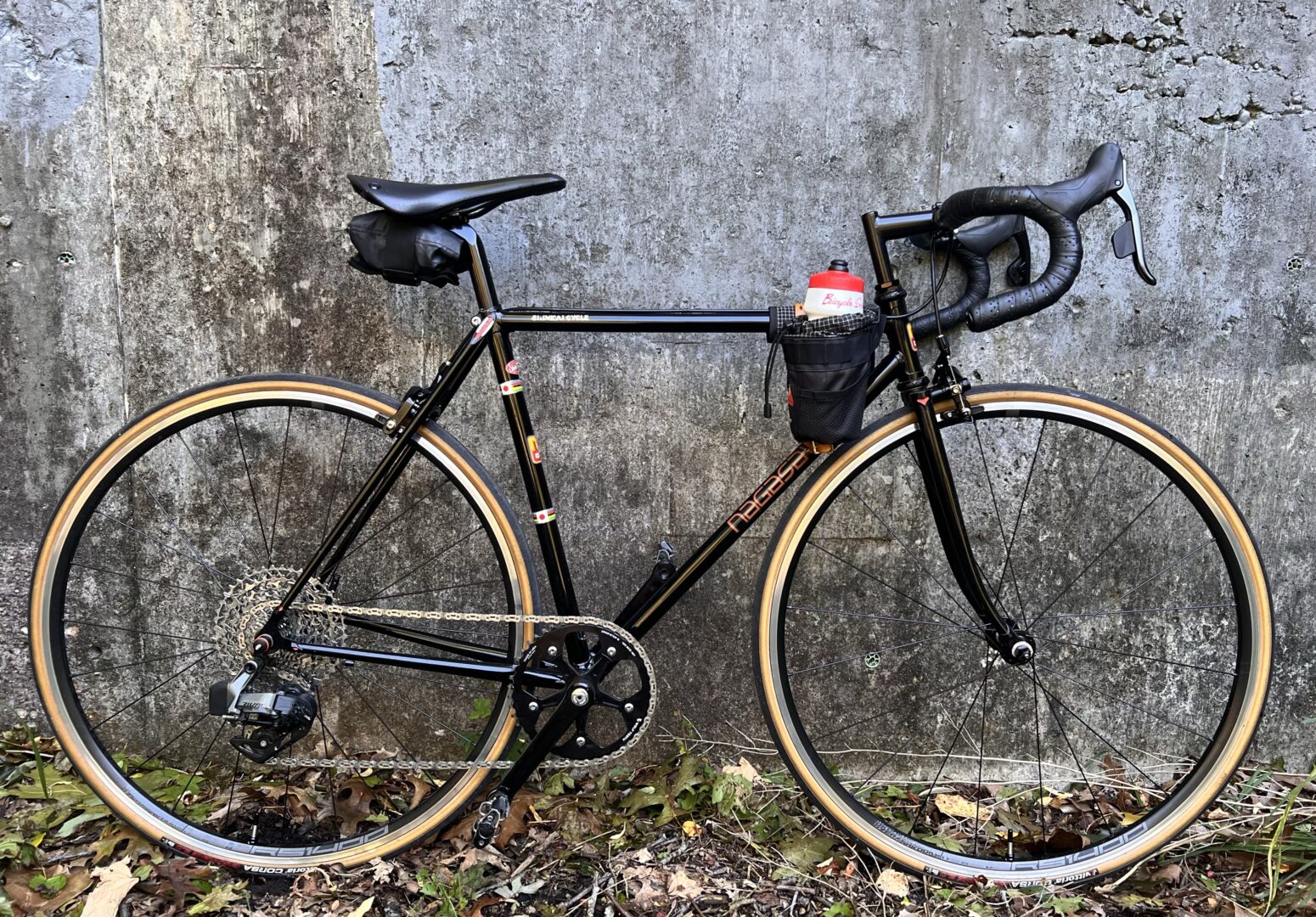
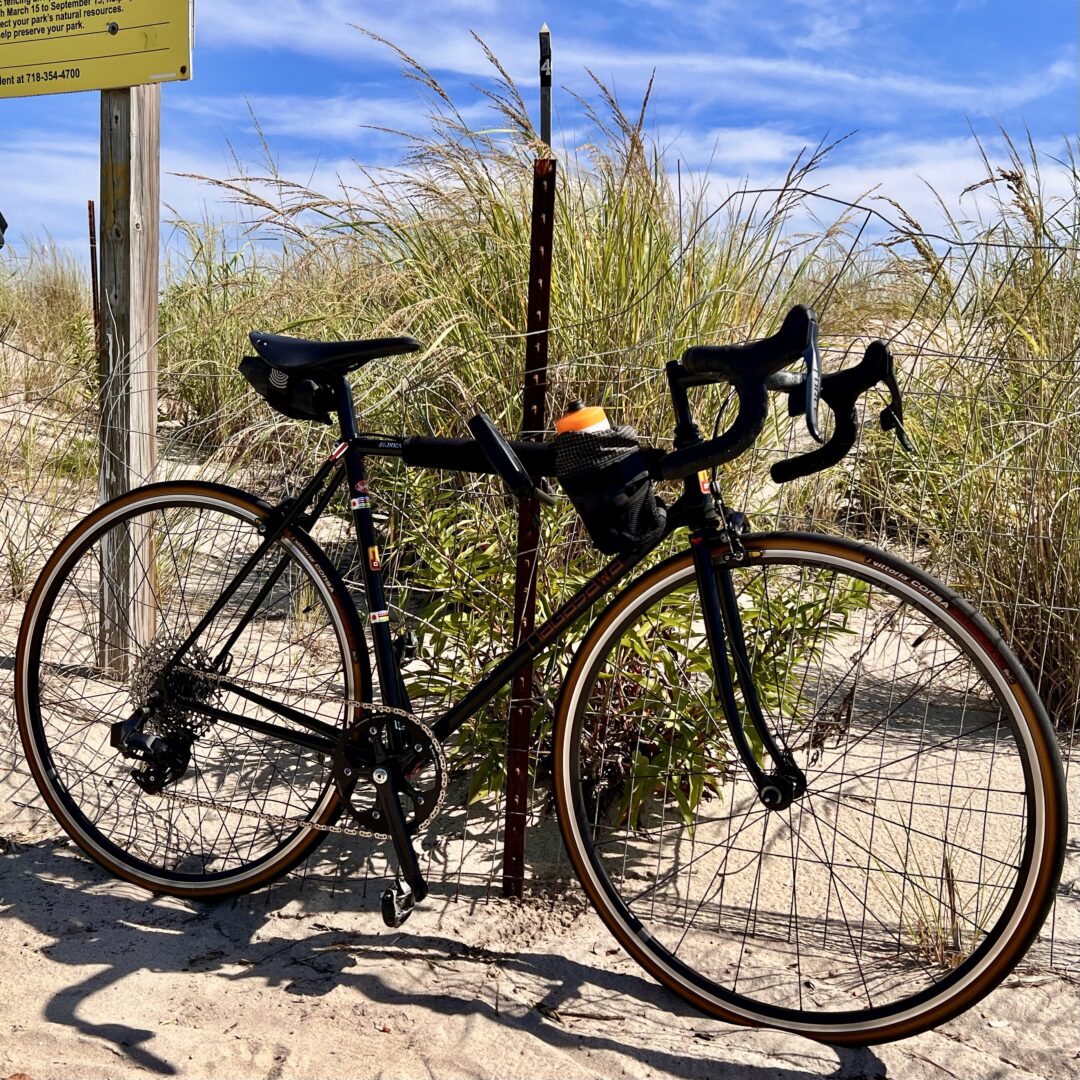
Despite the classic parts, I couldn’t reconcile having a vintage build with modern direct-mount rim brakes.  Presented with an excuse to make this is “nuevo retro” build, I decided I would re-imagine the bike as a 1x with electronic shifting, based on the SRAM XPLR series.  A single 46T Wolf Tooth chainring up front and a wide-range 11-42 cassette paired to Rival XPLR rear derailleur gives me a shifting range wide enough to conquer any hills.
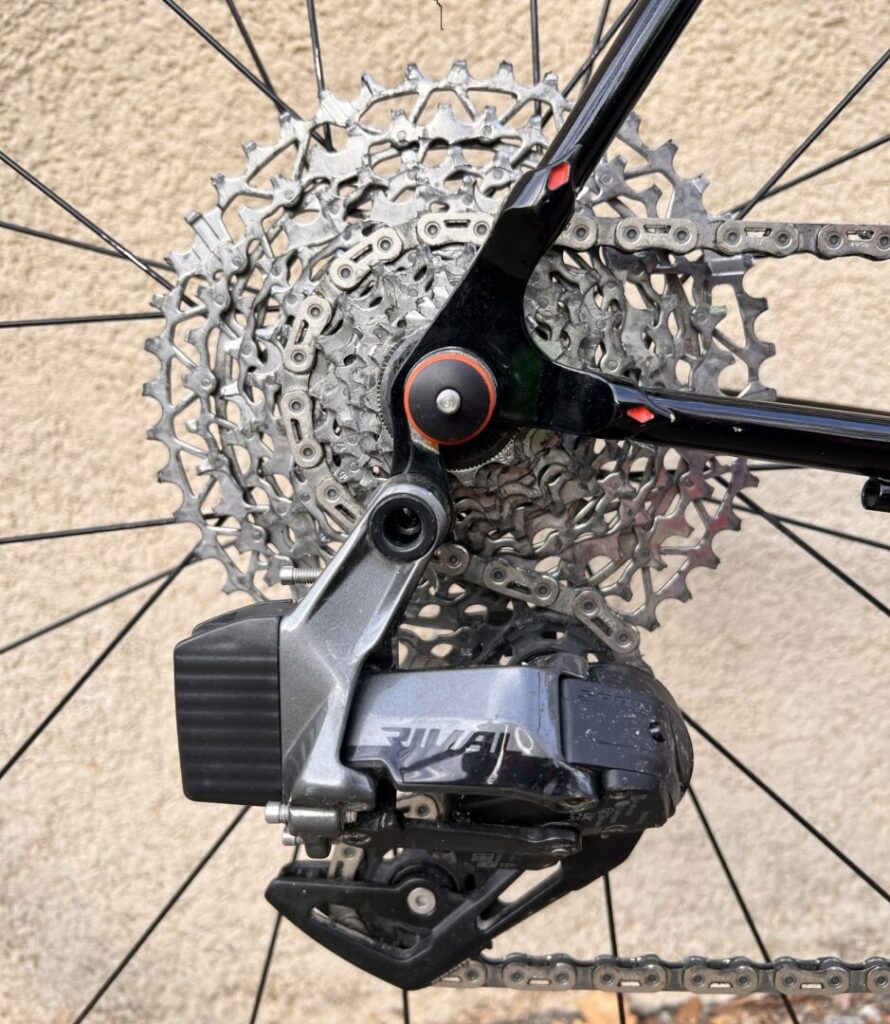
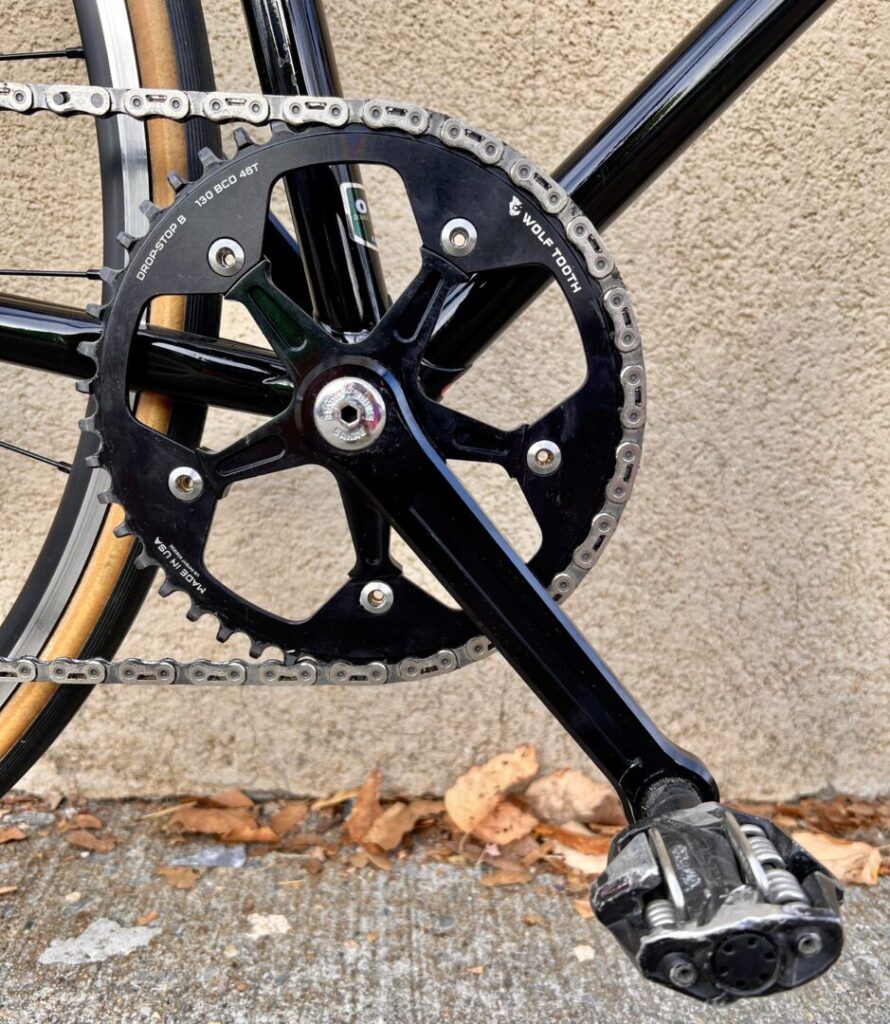
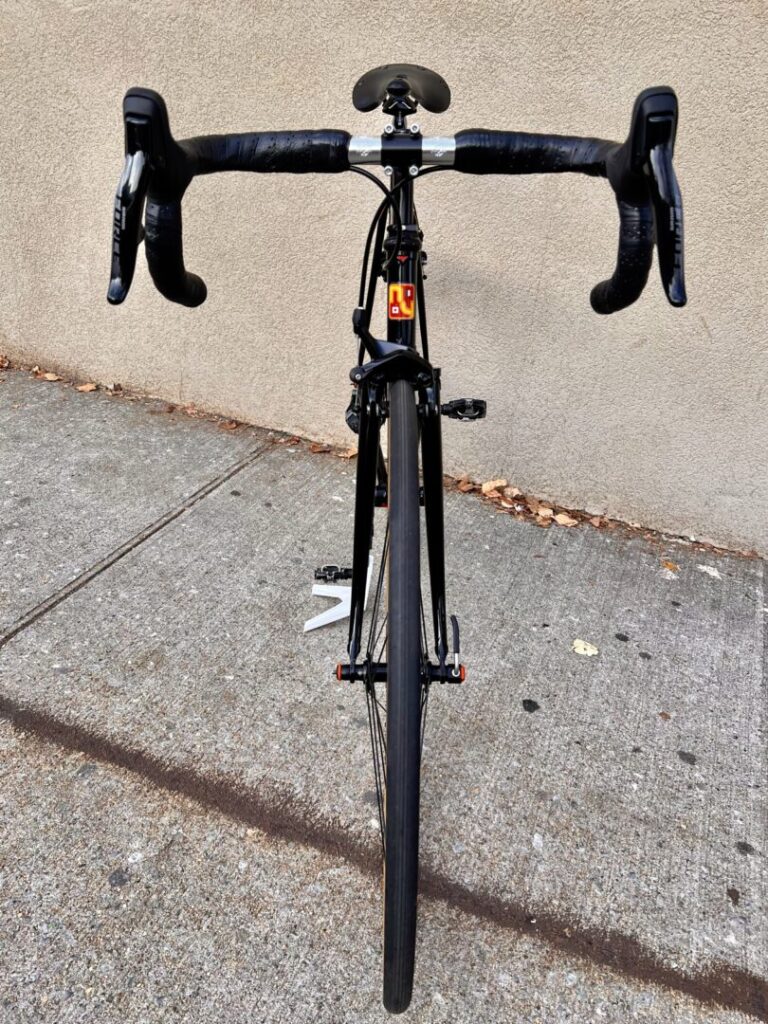
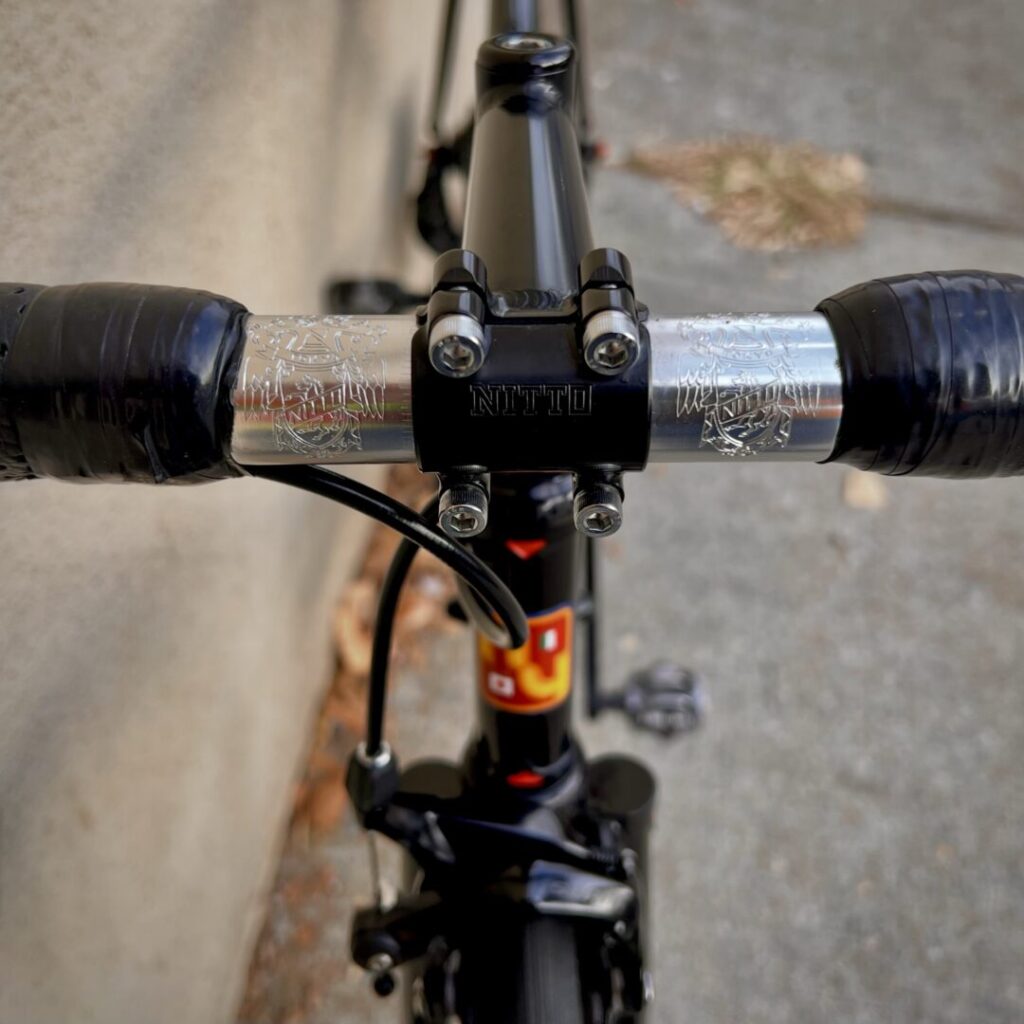
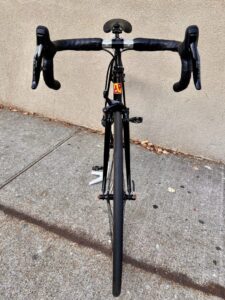
It uses SRAM Force eTap D1 rim brake shifters paired to SRAM Red direct mount brakes. This is my first bike with modern direct-pulls, and they are noticeably more responsive than typical rim brakes. The cockpit is a Nitto FW-33 Power Stem from Blue Lug and Nitto Fairweather M174AA handlebars wrapped in black leather. Fairweather bars are the same as Nitto “Noodles” but with a shallower reach for modern shifters.  They have rapidly become my favorite handlebar, although they can be hard to find.  I found an inexpensive low-profile clincher wheelset on AliExpress, the “Koozer R1400”, that are perfect for every day riding.  I mounted Vittoria 700×25 tires, which are probably as wide as this frame can handle. I finished it off with an all-black Chris King sotto voce headset, a black Nitto 626 Crystal Fellow seat post and a Brooks C17 saddle.  For a little “flair,” I splashed out on set of Paul Components quick-release skewers.
The frame has no water bottle cage mount so I use this handy frame bag.

I finished the build this summer and have put several hundred miles on it since.  The shifting is utterly smooth and silent, with instantaneous crisp shifts. The lack of shifting cables keeps the build visually clean, and the 1x drivetrain is a nice call-back to the bike’s origins as a track machine. In my experience, front derailleurs are the one component that fails more than any other on the bike. I’ve fallen in love with 1x drivetrains over the past 3 years, for their simplicity and reliability. Braking is excellent and well modulated.
On the road, the Nagasawa handles like the NJS track bike it is at heart, but the taller stem and Nitto Fairweather bars mellows it out. Light and stiff, it’s a great climber and sprinter. The aggressive geometry and skinny tire clearances means it’s never going to be a tourer, but I’ve been on it for several all-day rides with no aches, pains or numb hands. I plan to hold onto this one for a long time.
 

Mystery 3Rensho Carbo-Panel Prototype

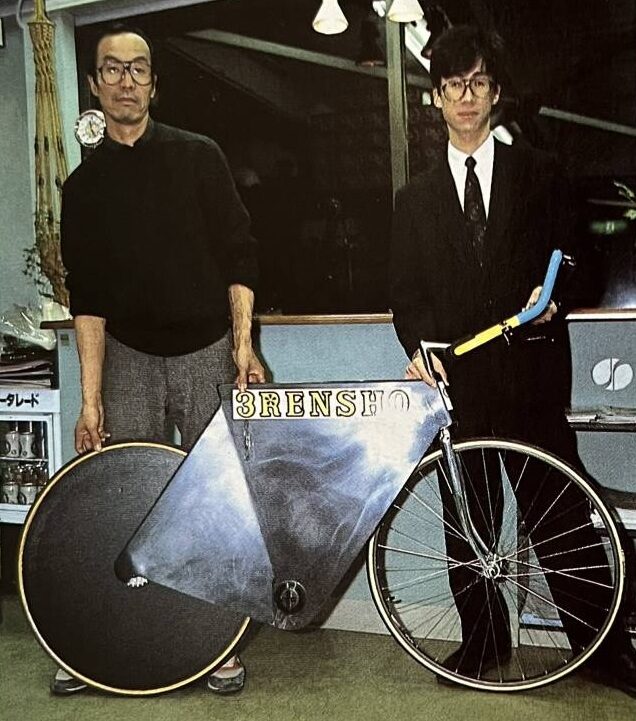
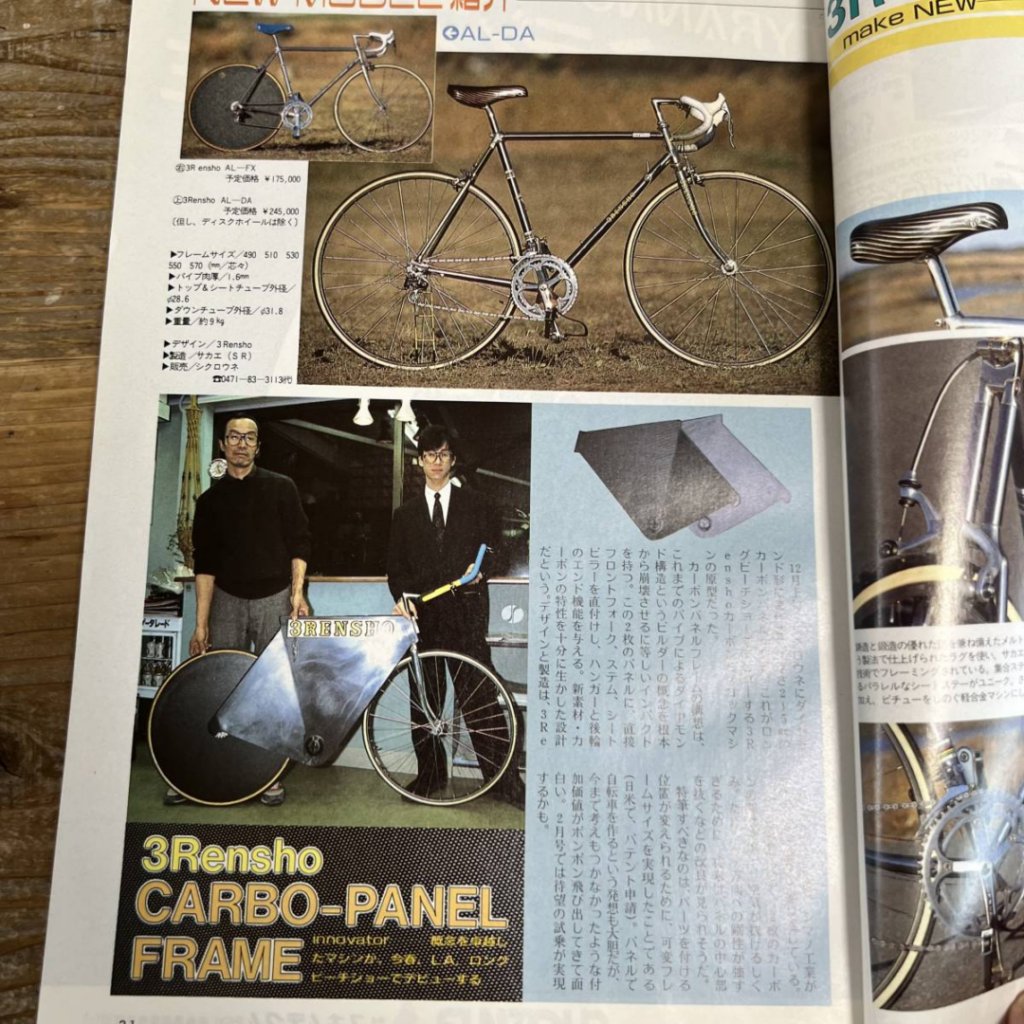
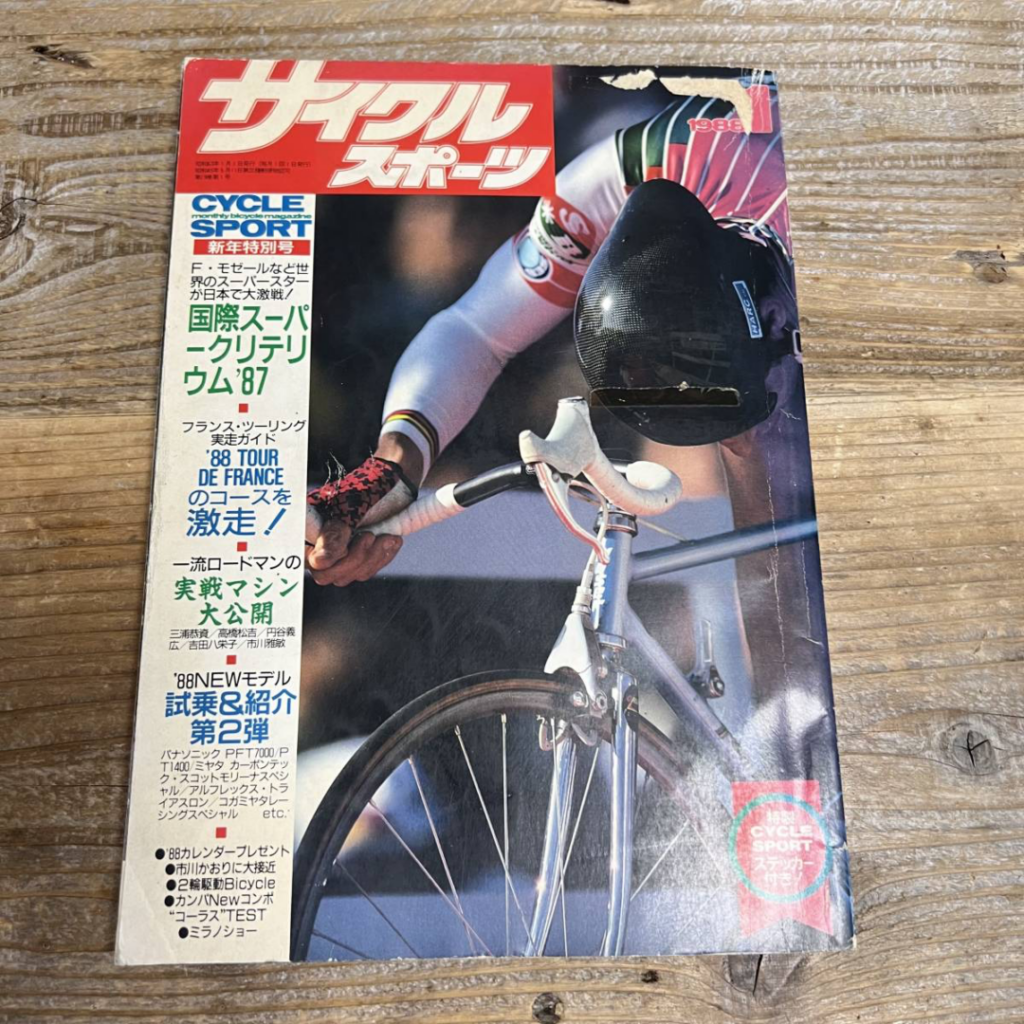
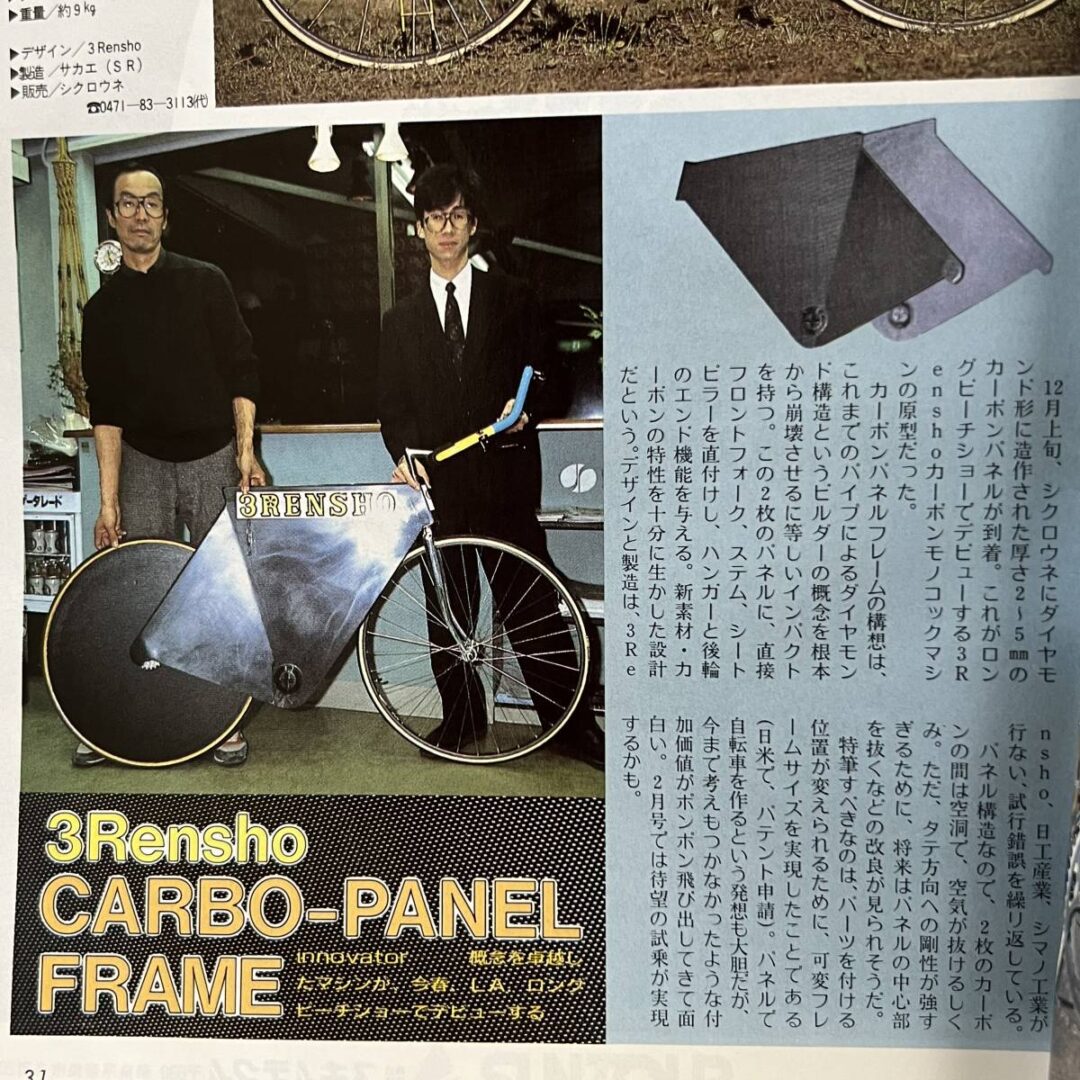
A few years ago, I came across this scan from the January 1988 issue of “Cycle Sports,” a Japanese cycling magazine.  Within a longer article about 3Rensho aluminum road bikes is a feature on a prototype carbon frame called the “Carbo-Panel.”  Designed by 3Rensho and manufactured in partnership with Nikko Sangyo and Shimano, it featured a unique design consisting of two carbon panels (2-5mm thick) that form the frame of the bike.


At the time this was written, most of the carbon frames on the market used tubes that were chemically bonded together.  The Carbo-Panel no underlying frame structure and is hollow inside, with the panels functioning as the frame.

Components like the fork and seat post are mounted directly to these panels.  The article notes that the frame can be adapted to fit riders of different sizes based on where the components are mounted.

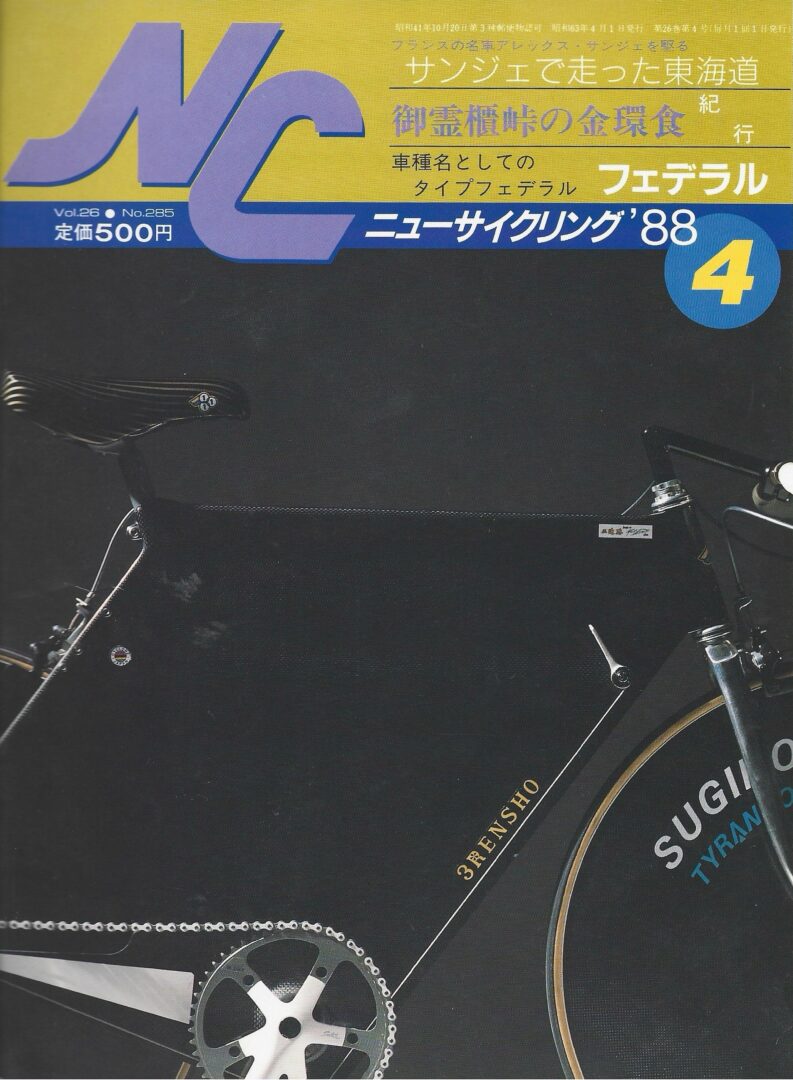
The article goes on to point out that this is a prototype, complaining that “rigidity in the vertical direction is too strong,” and suggesting that it could be improved by adding a cut out to the central part of the panel.  Around the same time this article was published, the prototype was being displayed at the 1988 World Cycle Fair in Long Beach, California. The author goes on to say they look forward to a test ride, which will be written about in the February issue.  I don’t have a copy of that review, but in April 1988, a complete Carbo-Panel made the cover of the Japanese cycling magazine “New Cycling“:

Google translated from the original Japanese, the Editor’s note states:

“It is self-evident that when an object’s material changes, it naturally has certain material properties, and its shape changes accordingly.  Bicycles, which have entered an era of new materials, are no exception.  I just so happens that in this day and age, new materials are being handled, discussed, and made within the expanding field of steel production.  In the future, if bicycles made from new materials, including their parts, are conceived and made in a completely different dimension from steel, they will undoubtably be called “new material bicycles” in both name and reality.”

I hope to find more about this carbon prototype in the future, including any ride reviews, if they exist.  In the process of researching this bike, I came across a collaboration between pioneering American carbon bike designer Brent Trimble and Zunow.  My next article will be all about it.

More Lovely Zunow 650B Randonneur Bikes

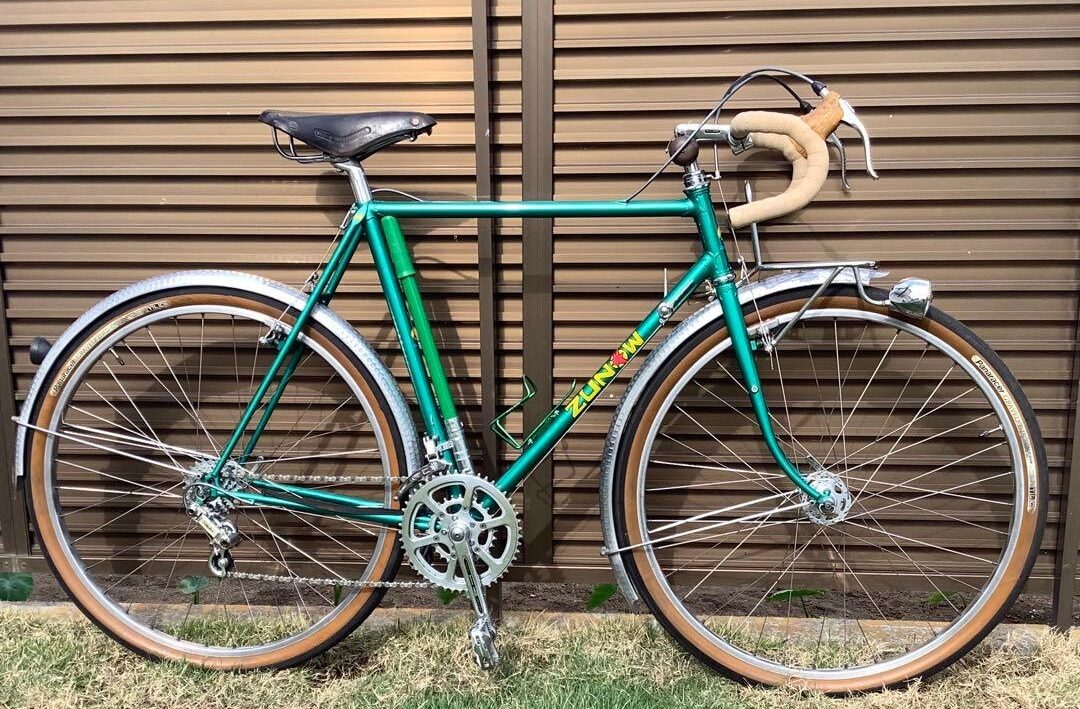
The best deals are always “local pick-up only.” I saw this Zunow “Nuovo Touring” randonneur bike for sale on Japan’s Mercari marketplace last month.  It sold for around $1000 USD and a trip to Atsugi City.  Quite a steal, if you live locally.  Collectors around the world know that you have to travel to get the best deals. I downloaded the photos from the listing and am sharing them here to show off a “vintage correct” build for one of these iconic bikes.

Over a decade ago, I decided that I prefer “brifter” (brake + shifter) controls over down-tube or bar-end shifters.  With a few exceptions, my restorations have moved towards “neo-retro” builds that use modern parts, tastefully chosen to maintain a vintage look.  Here’s what my Zunow Randonneur looked like before I switched the components to Campagnolo.  This particular Zunow looks much like it did when brand new in the late 1970s, with the exception of modern SPD pedals.  Read on for more photos and details!

Continue reading →

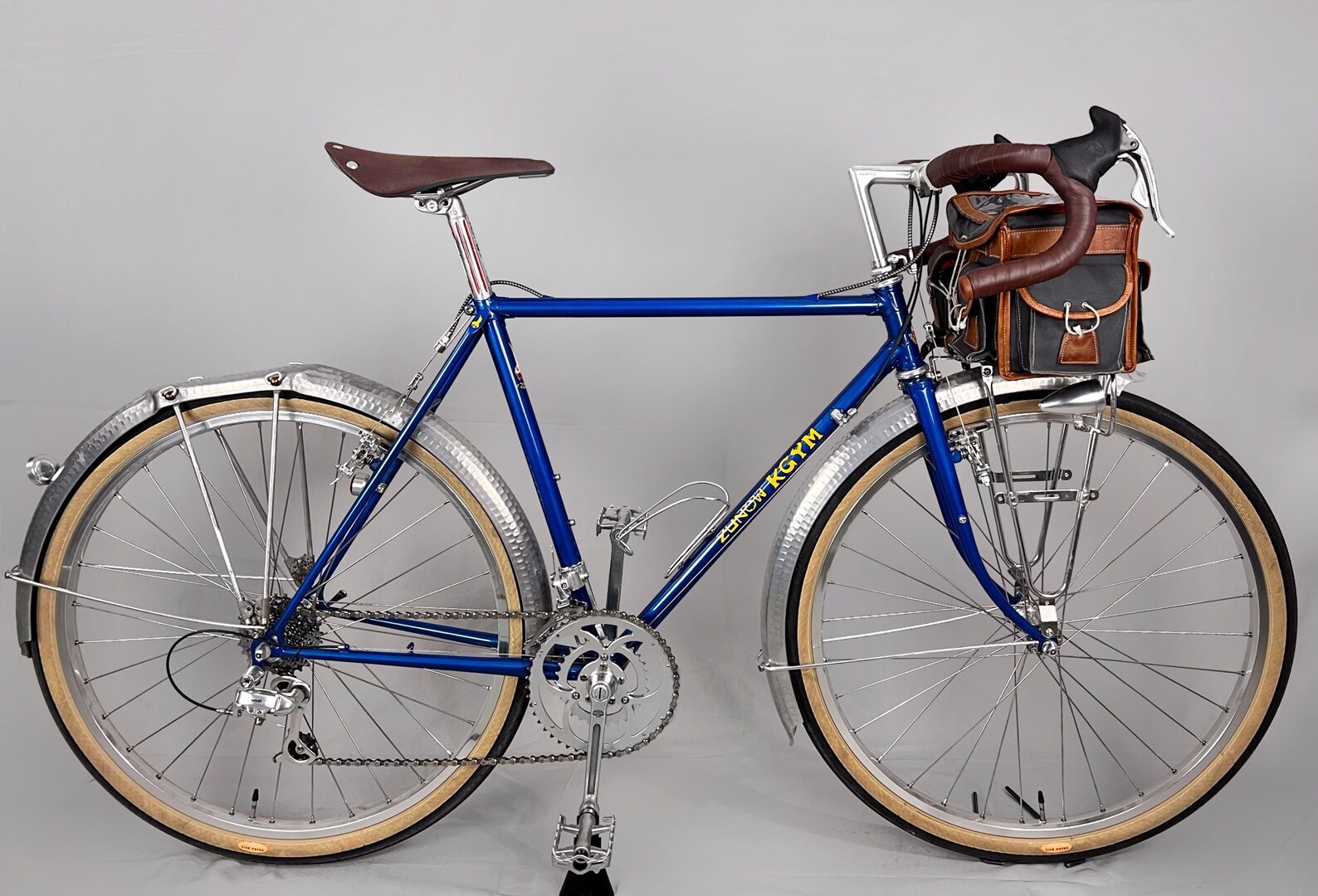
Zunow KYGM Randonneur Restored

I’ve been long overdue in sharing this restoration of my wife’s Zunow KYGM randonneur bike.  Originally acquired via Yahoo Japan auctions in 2020, it is a sibling of my own Zunow randonneur bike and an example of Kageyama-san’s early full-custom work.  Dating from the early 1970s, it is in the style of classic French randonneur bicycles, complete with Nervex lugs, 650B wheels, and Gilles Berthoud handlebar bag.  I wrote about the bike and its history in detail in this article from 2022.

After the initial build was complete, the plan was to put a few hundred miles on it to confirm it fit before kicking off a restoration.  She loved riding it so much that two years passed by quickly.

As 2024 rolled around, I promised myself that I would have it ready for her birthday in February.  That winter, I had it professionally repainted in a beautiful dark blue sparkle with yellow accents.  After the new paint, I began the rebuild, with help from Dave Perry at BikeCult.  Dave did a great job building the wheels and installing the fenders. Read on for all the details and a gallery of photos!

Continue reading →

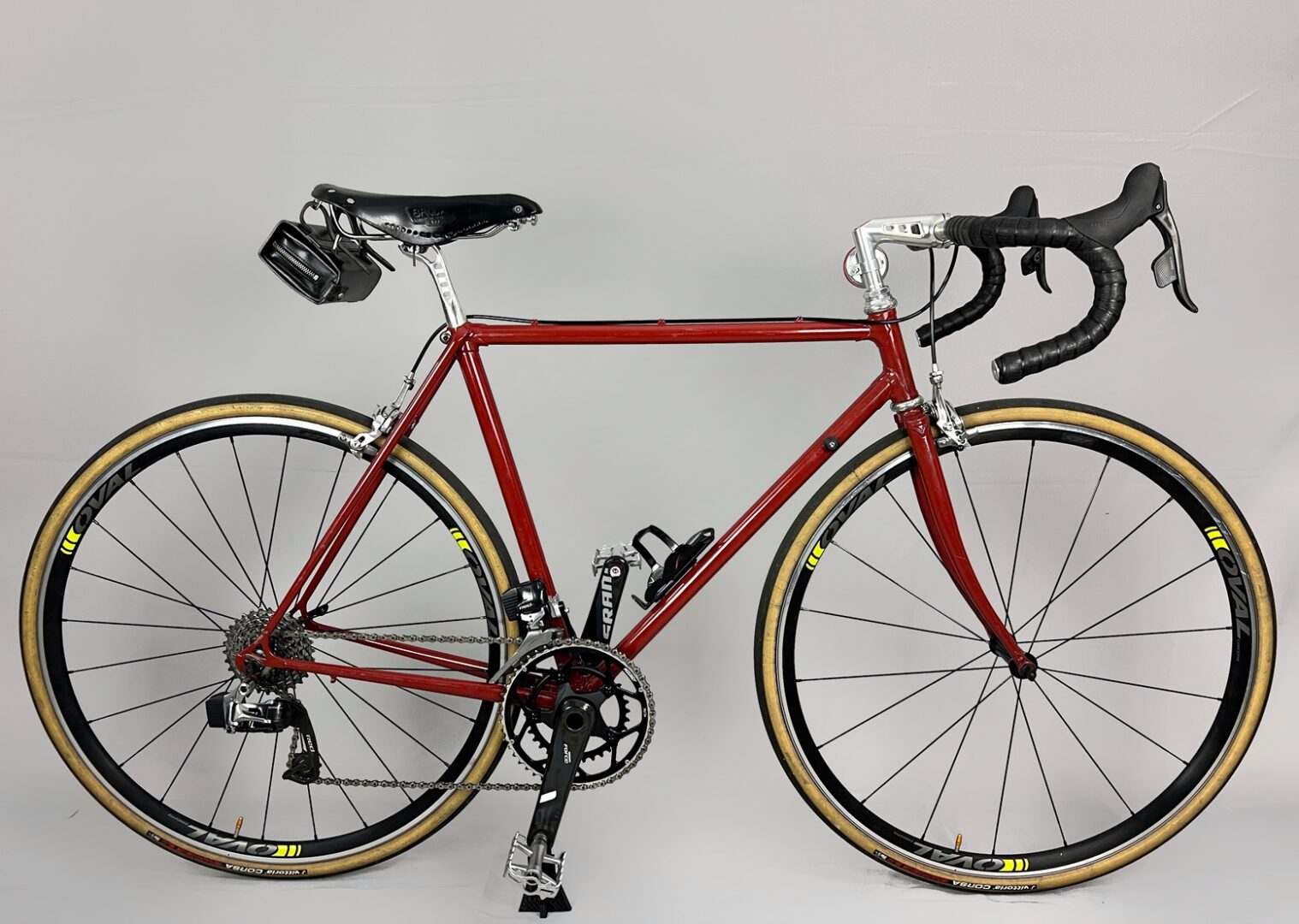
Adventures in eTap: Trusty Rusty goes wireless

Ten years later, the second frame I ever built is still going strong.  I gave it to my wife when we first started dating, and she named it “Trusty Rusty” for its ketchup-red color.  Since then she has put countless miles on ol’ Rusty.  As an inveterate bike bodger, over time I swapped out the original build of silver SRAM Rival 10-speed for a Campagnolo Centaur compact group set.  I also added a Modolo Q-Race stem and a matching seat post, both featuring some cool “speed holes.”

After a few years of that, I pounced on a gently used SRAM Red eTap 11-speed group set that came up for sale.  Ironically, it came out around the time I first built this bike. This was the first electronic shifting group either myself or my wife had used, and we were both skeptical.  After a couple of long rides, however, my wife reported back that it was the best-performing group she’d ever ridden.  Check out the rest of the build details and more photos after the jump.

Continue reading →

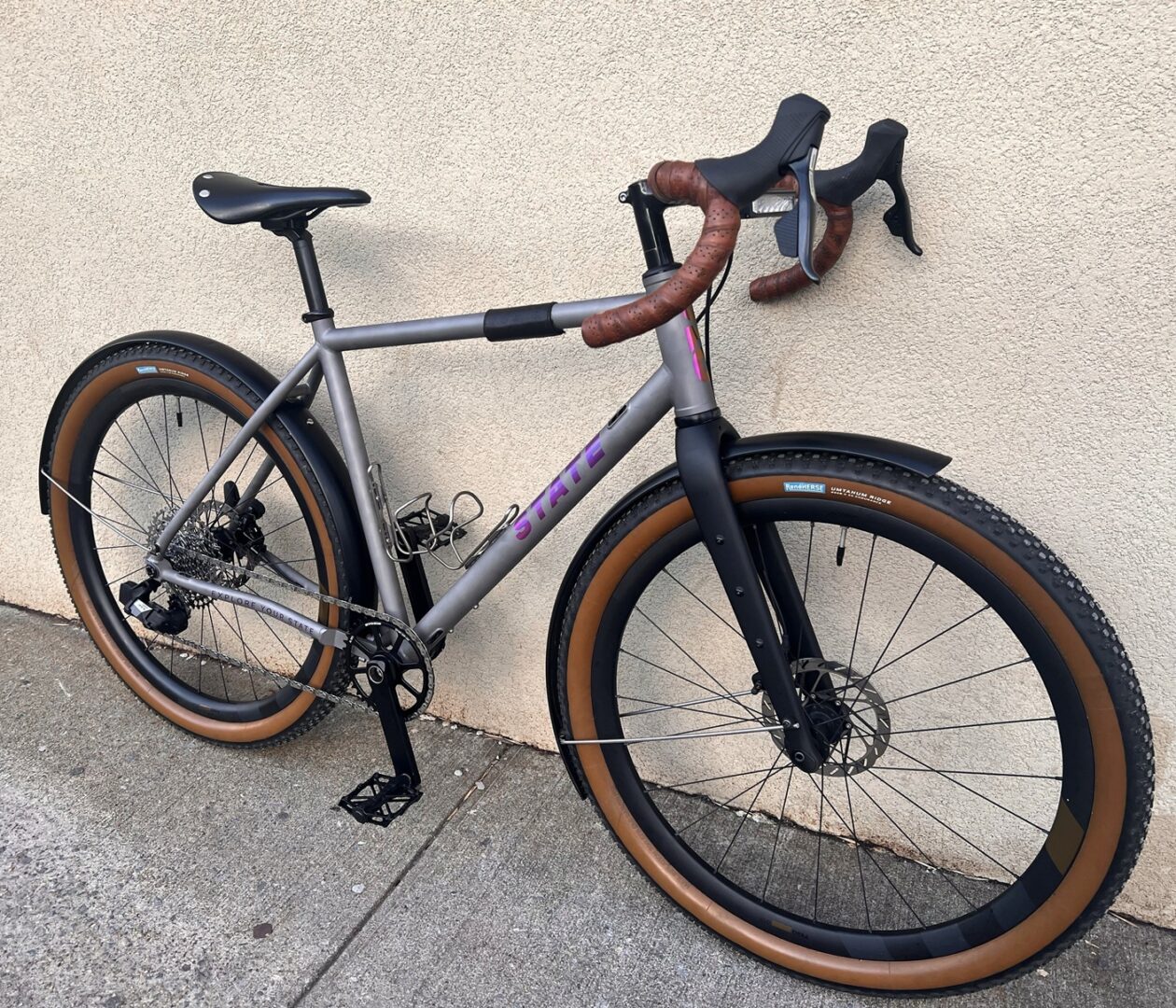
State Titanium All-Road Build & First Impressions

My love affair with State Bicycle’s “All-Road” series of gravel bikes was sparked by their 4130 model, which I reviewed in this post.  After riding that bike for two years, I only had one complaint: the weight.  Twenty-seven pounds in its stock configuration (spec sheet here), and closer to forty when outfitted with racks and bags.  The chromoly steel tubing yields a smooth ride over rough terrain, but that’s a lot of bike to get moving!  As I huffed & puffed my way up yet another bridge, I considered the eternal question of cycling.  An age-old conundrum that every cyclist eventually finds themselves pondering: what if I could have the same bike, but lighter and better?  Enter State’s Titanium All-Road gravel frame.  After saving up and waiting a year for State to build a new run of these frames, I finally got my hands on one.  Read on for the build, first riding impressions, and a little titanium bike history.

Continue reading →

Specialized Globe Live 03 Review

The Globe Live 03 was Specialized’s top tier grocery-getter in 2012, sporting a Gates carbon belt drive, eight-speed Alfine hub, hydraulic disc brakes and an integrated rack.  Bikeradar called it a “Tricked out Townie” and it was sold at the premium price of $1,550.  This example that I recently refurbished came to me missing a front wheel and several other bits.  Along with the a new wheel, I replaced the tires, brake pads and rotors, and brake fluid.  I repaired the stuck Alfine trigger shifter and installed a new leather saddle with matching grips.  The big surprise is how much fun it is to ride!  Read on for my review and info on the Globe Live 03.

Continue reading →