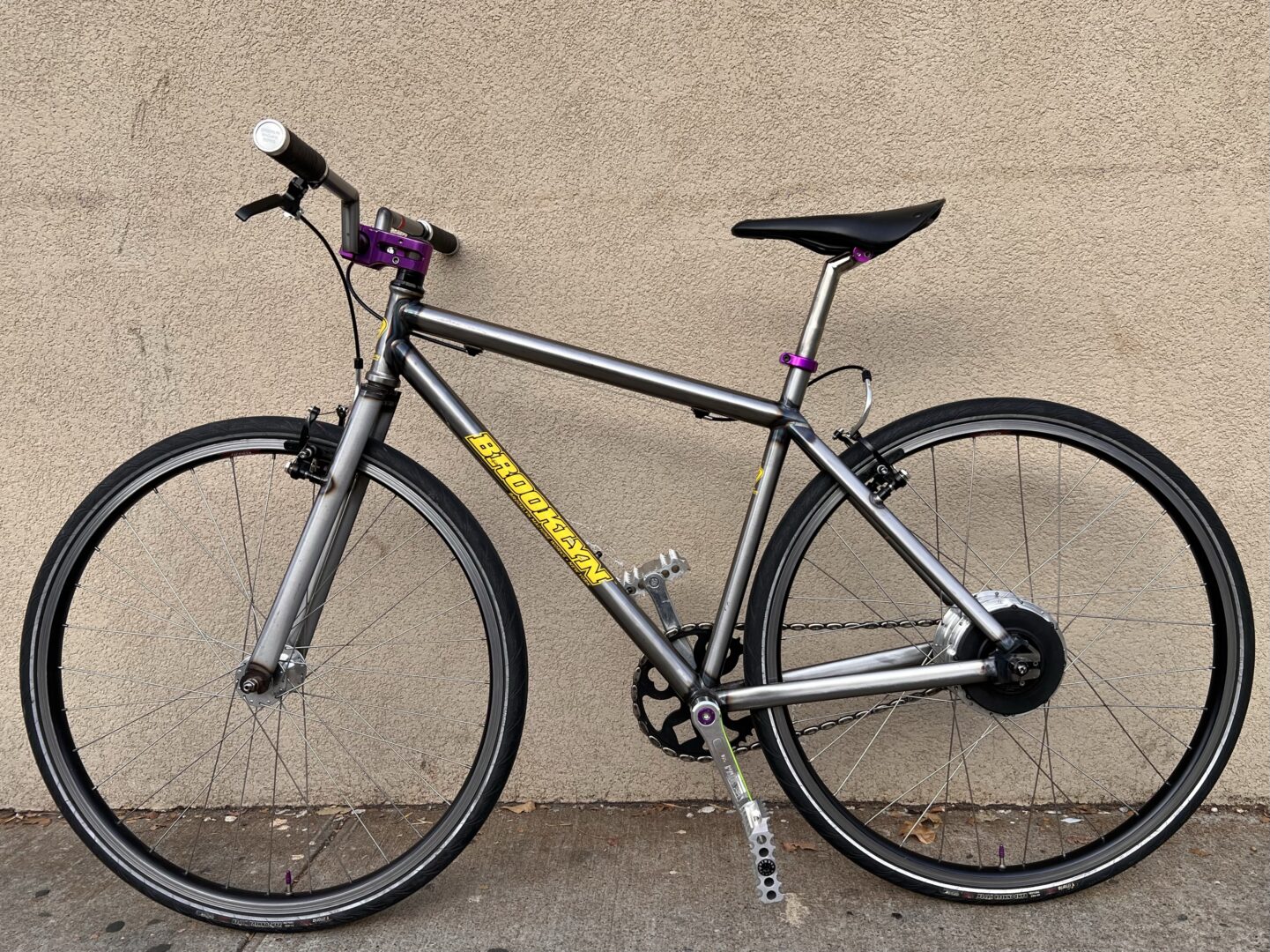
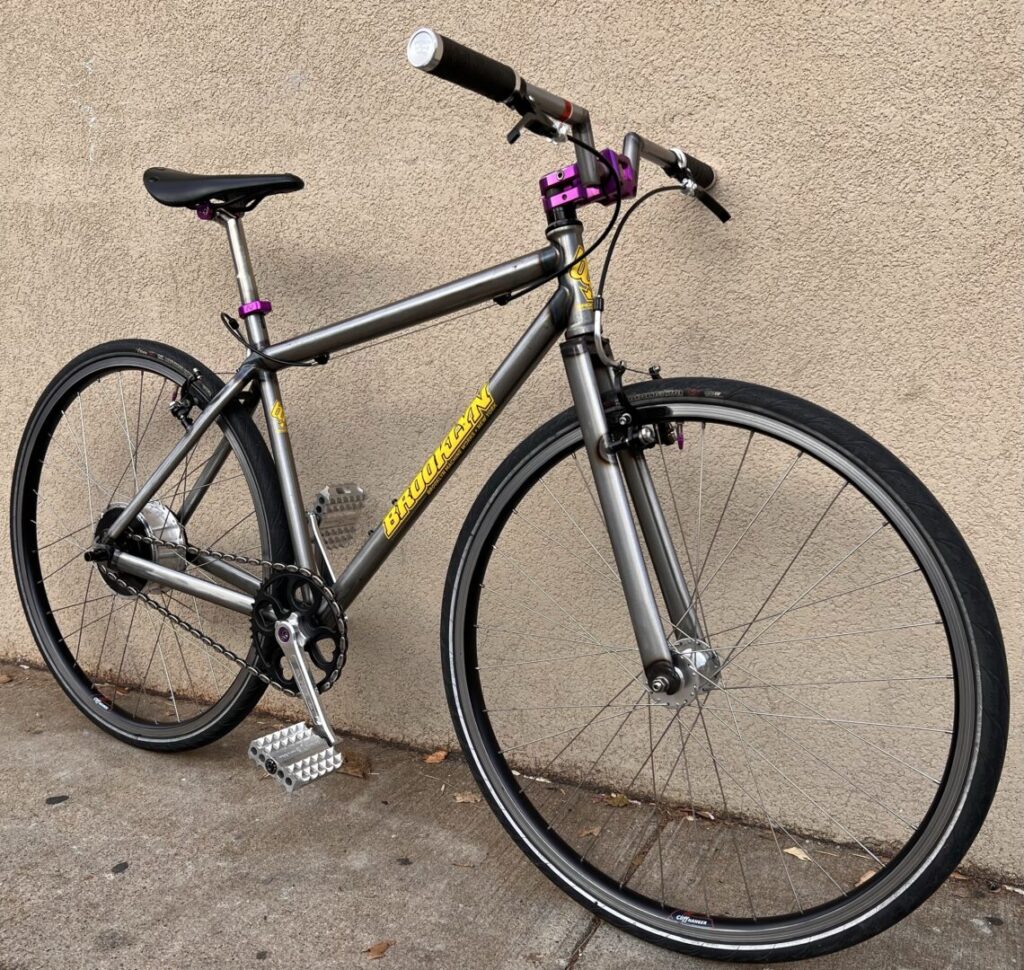
 Brooklyn Machine Works is an iconic brand that’s been a favorite of mine for the past twenty years. I couldn’t afford one of their signature “Gangsta Track” bikes back in the day, but thanks to the collaboration between BMW and Japanese brand WBase, I now have two, one for me and one for my wife. I added pedal assist e-bike motors to both, and they are rugged, reliable city bikes that take us all over New York City in style.
Read on for more info and photos!
When I first got into riding fixed gear bikes in New York City, BMW had just debuted their unique “Gangsta Track” bike. The fastest messengers in the city rode this bike, and a few years later, Pharrell Williams became a high-profile Gangsta Track owner and an investor in the company. In 2006, I was living off a meagre salary from a record label job and working on my master’s degree, so the Gangsta was out of my price range.
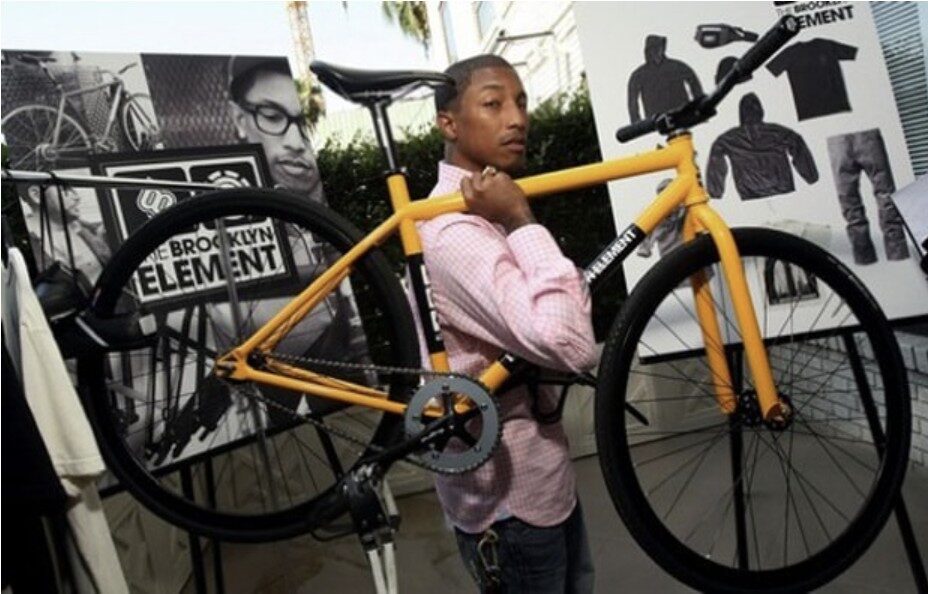
Brooklyn Machine Works had already been around for a decade at that point. Founded by Joe Avedesian and “Doc” (who gets his nick name from his past profession as a practicing MD), they started out making heavy-duty brakes and pedals for downhill bikes. In 1997, they debuted their first bike, the Super Trucker, at the Interbike show and a legend was born. The later BMW Race Link, which Spoke Magazine cites as “defining an entire zeitgeist” cemented their reputation for combining innovative design with overbuilt durability and a street style aesthetic.
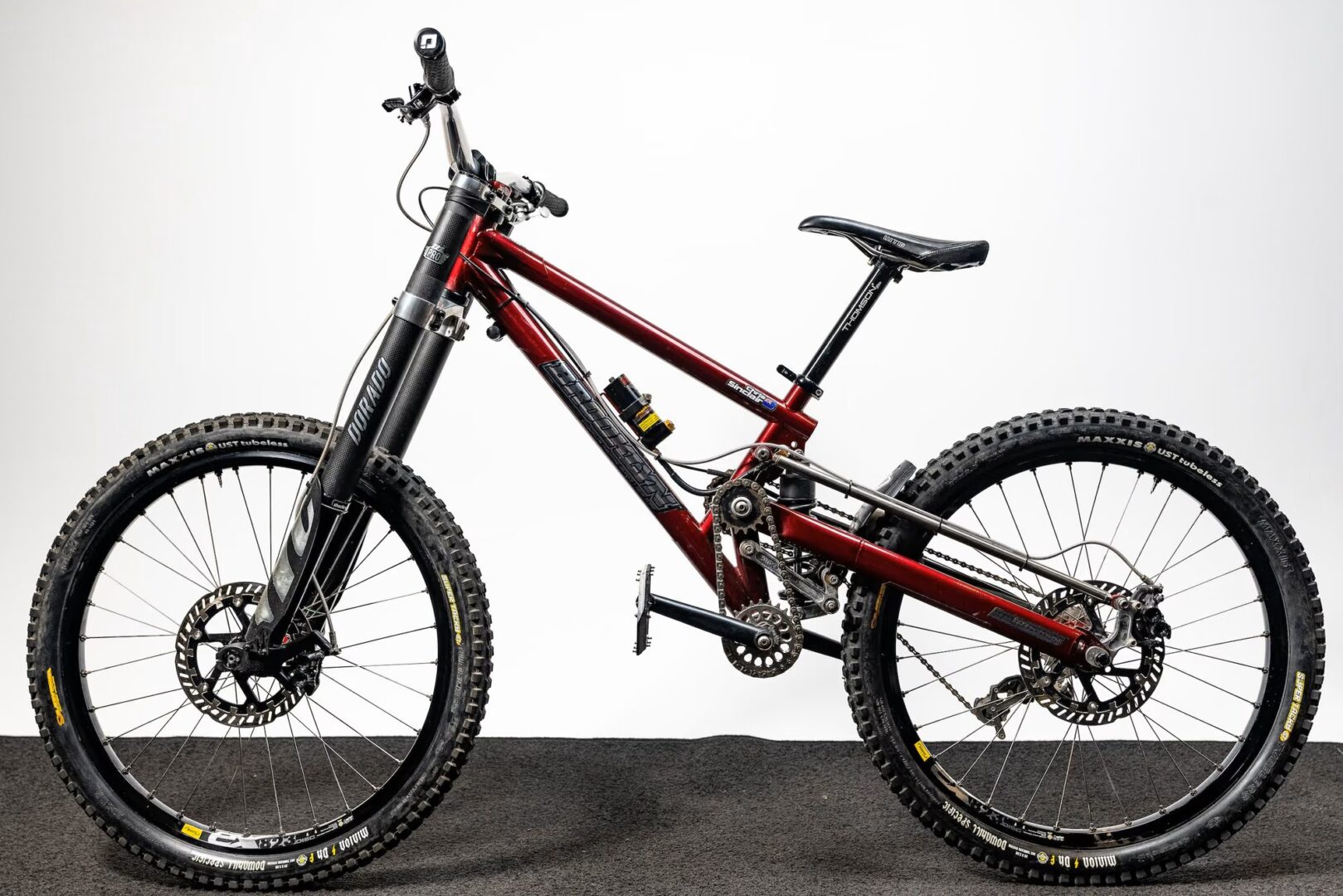 The Gangsta Track was designed by Joe and inspired by his experience riding vintage English track frames. He aimed to keep their quick track handling, while reducing toe overlap and low-speed oversteer. The “V1” model debuted in summer 2005 with a signature bi-plane fork—which let riders lock the front wheel and frame to a pole with a standard U-lock—and stout bladed tubing. These early prototypes were ridden by couriers in New York City, London, and Tokyo, leading to messenger-driven refinements before production began.
Alongside the explosion of urban bike culture in the mid-aughts, another influential scene developed: fixed-gear freestyle (FGFS). Riders did various BMX-style tricks on full-sized 700c-wheeled bikes, which didn’t always hold up to the stresses of hard landings. The rugged Gangsta became a popular FGFS bike, with riders replacing the bi-plane fork with a sturdier unicrown type. John Watson of the Radavist shared photos of his BMW Gangsta from that era, which was the second size large ever made. Dedicated FGFS frames came a few years later, pushing the Gangsta out of the spotlight, but it remained a respected and sought-after bike.
Manufacturing moved from the USA to Taiwan in 2010, with the “V2” version of the Gangsta being made in Taiwan. You can take a trip down memory lane by giving their website a read – there’s been no updates since 2010, but there’s some great photos and posts from their heyday of the late aughts.
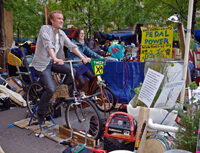 Despite not owning one, Brooklyn Machine Works would stay in my life in different ways over the years. In 2011, the Occupy Wall Street protest was in full swing and I was there in Zucotti Park daily as part of the Time’s Up bicycle collective. We were using makeshift bicycle-powered electric generators to provide power to the encampment, but they were falling apart from non-stop use. Joe generously welcomed Time’s Up into his shop, where we built 14 sturdy new generators, each capable of delivering 100 watts of power. Getting to work in his shop was a special honor for me. Later that year, Joe closed down the Brooklyn shop. I was invited back to tour the shop, and I still have some boxes of screws and other small bits he gave me.
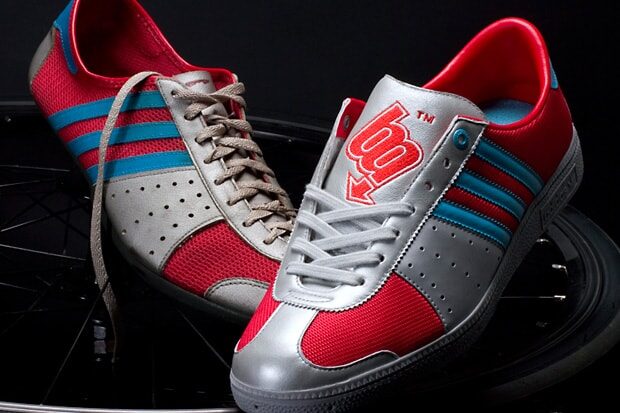 This was not the end of BMW, however. While bike manufacturing ended following a “sabbatical” in 2016, throughout the years Joe has leveraged the power of the BMW brand through collaborations with multiple fashion brands, beginning with the OG’s of streetwear, Supreme, in 1998. He collaborated with adidas Consortium in 2010 to release BMW cycling sneakers inspired by 1970s Eddy Merckx cycling shoes.
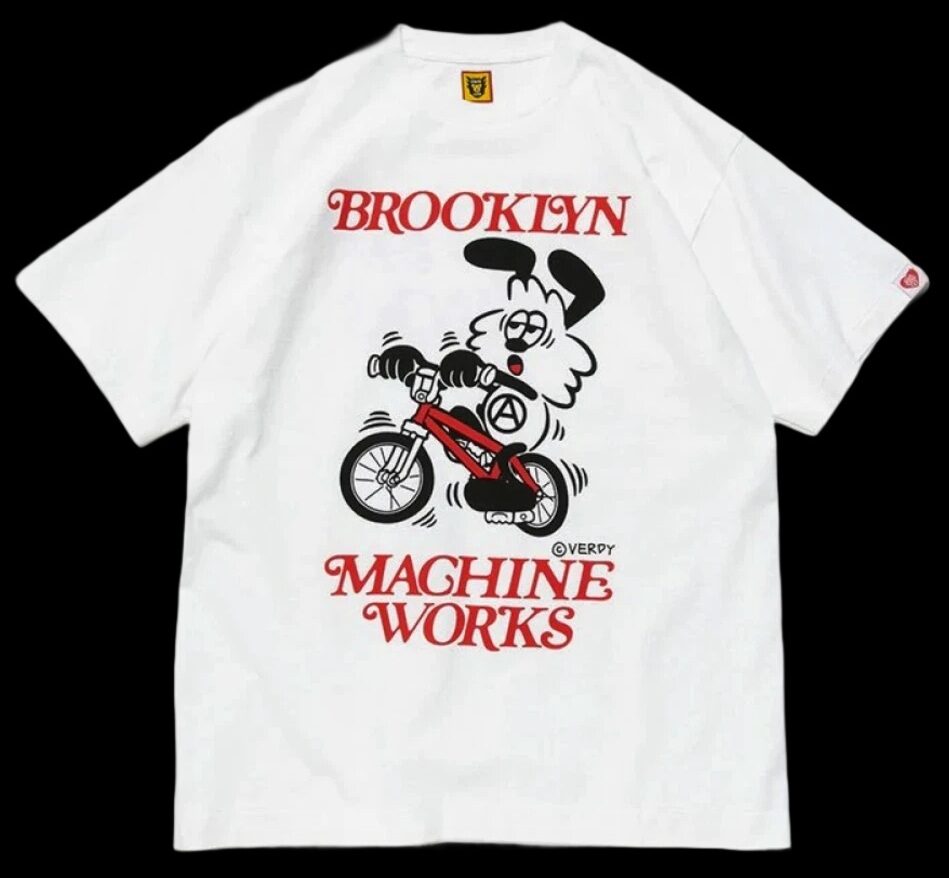 In 2015, Japanese clothing brand Uniqlo partnered with BMW on a line of graphic tees and sweatshirts. In 2022, BMW teamed up with Human Made and Verdy’s Girls Don’t Cry on a limited-edition BMX-inspired collection released in May of that year. Verdy’s t-shirt is my favorite collab design, and I wear it often. They revisited the Supreme collab in 2024 with a branded BMW park bike, and Uniqlo released new designs in 2025.
Now we come to perhaps the most consequential “collab”: the relaunch of their bikes with Japan’s Wbase. Founded in 2004 in Tokyo’s Shibuya neighborhood, Wbase (aka “double base”) specializes in BMX and fixed-gear bikes. In 2019, they released the “Gangsta Track V4” in collaboration with BMW. In the words of Marco at WBase:
“Joe (BMW’s CEO) and Wbase always had a strong relationship. But everything we do, we do it as friends. There is no license or contract between us. We’re just here to help Joe’s vision and creative instincts come to life.”
The frames and components are made in Asia, but to Joe’s designs and standards. The main noticeable difference between the V4 and earlier models is the inclusion cantilever brake mounts. Brakeless bikes aren’t street-legal in Japan, so they had to have this feature, although back in the day I remember seeing riders in NYC with Gangstas custom-modified with front brakes.
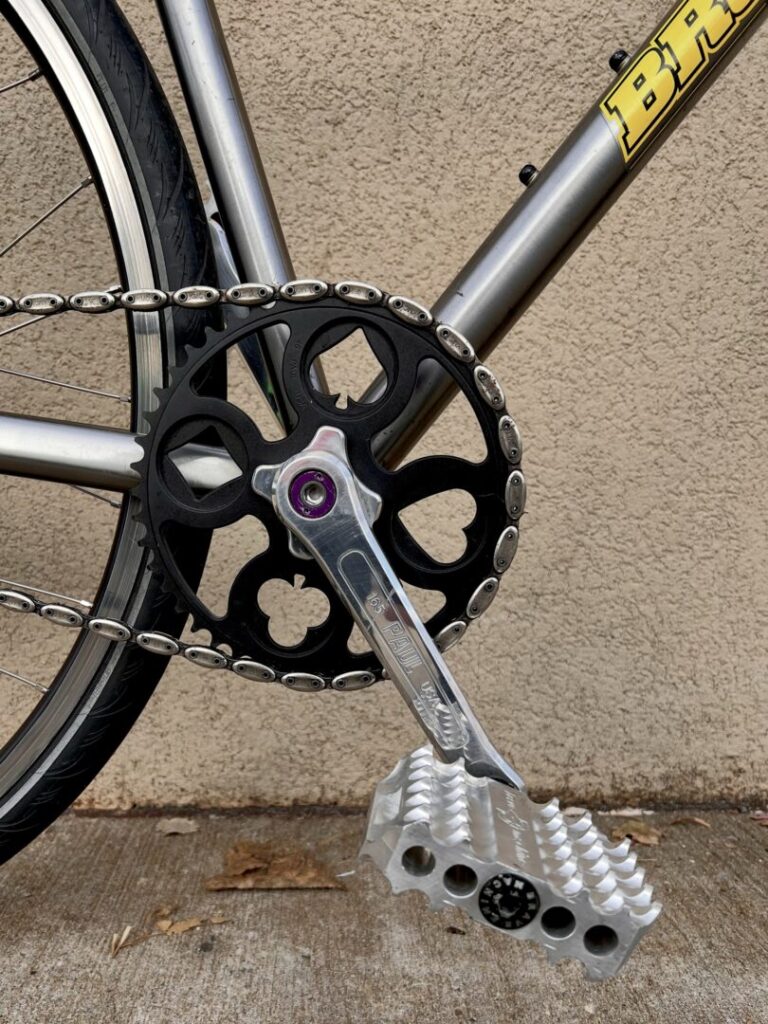
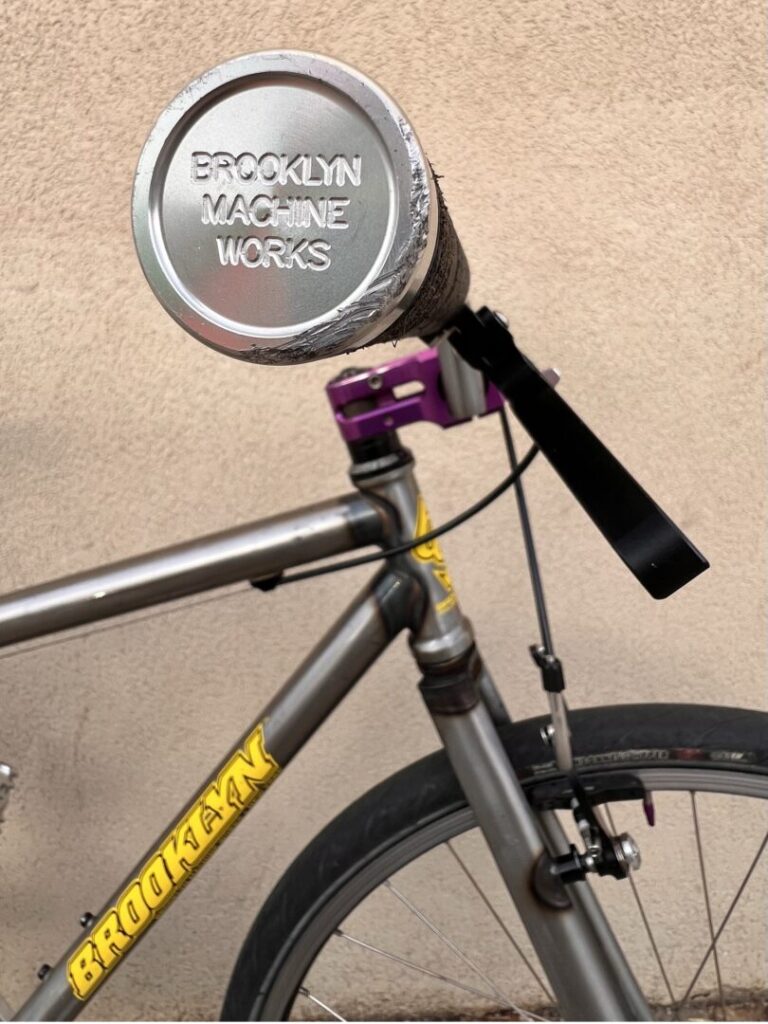
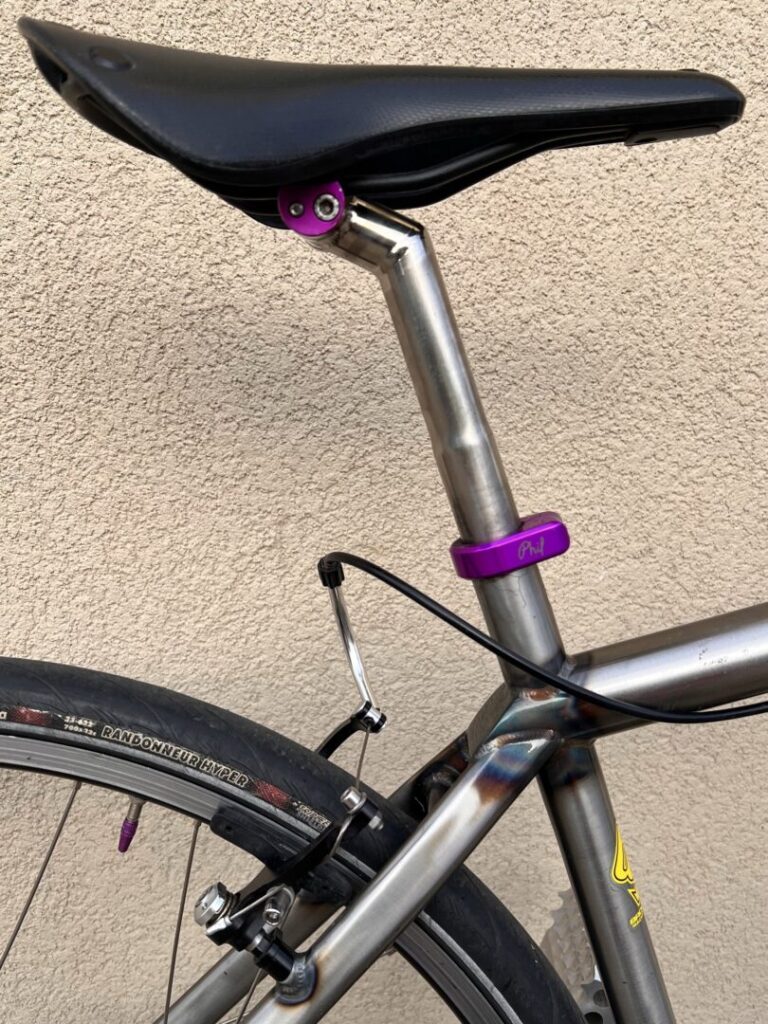
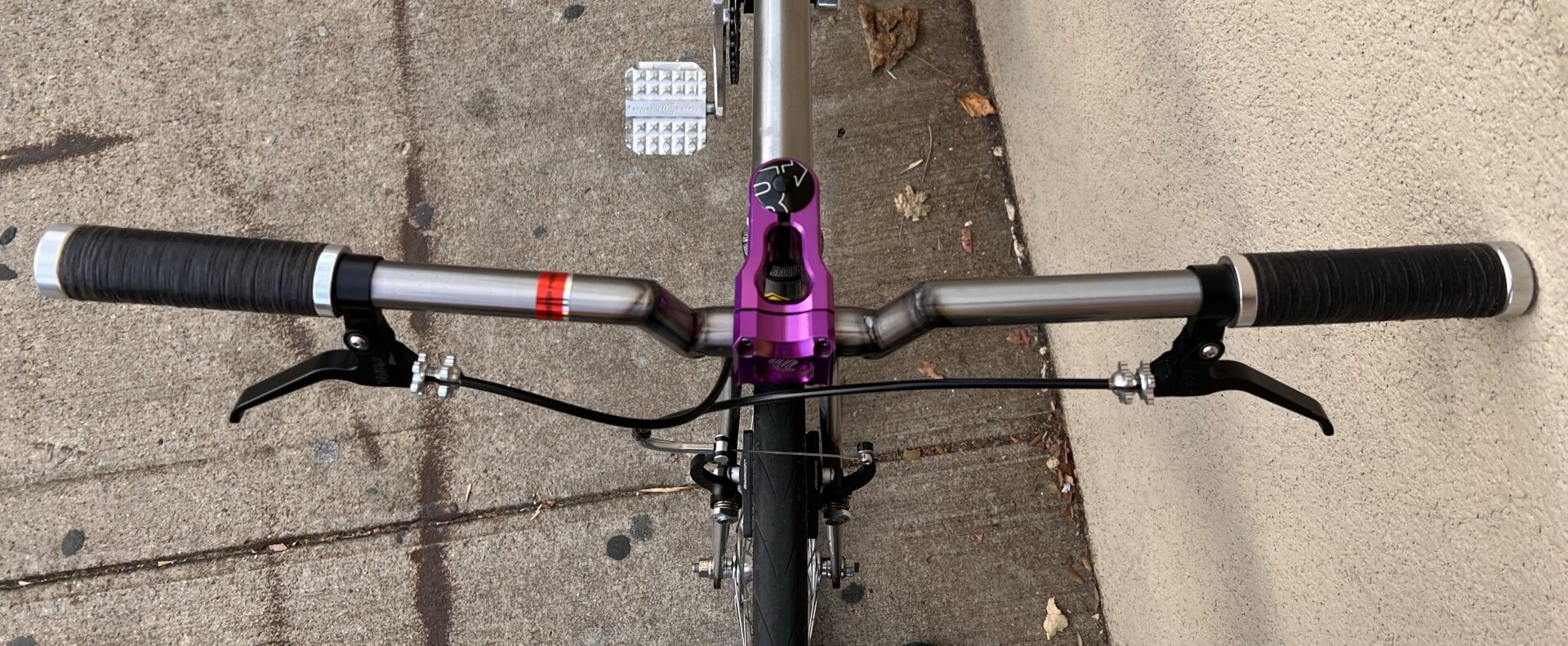
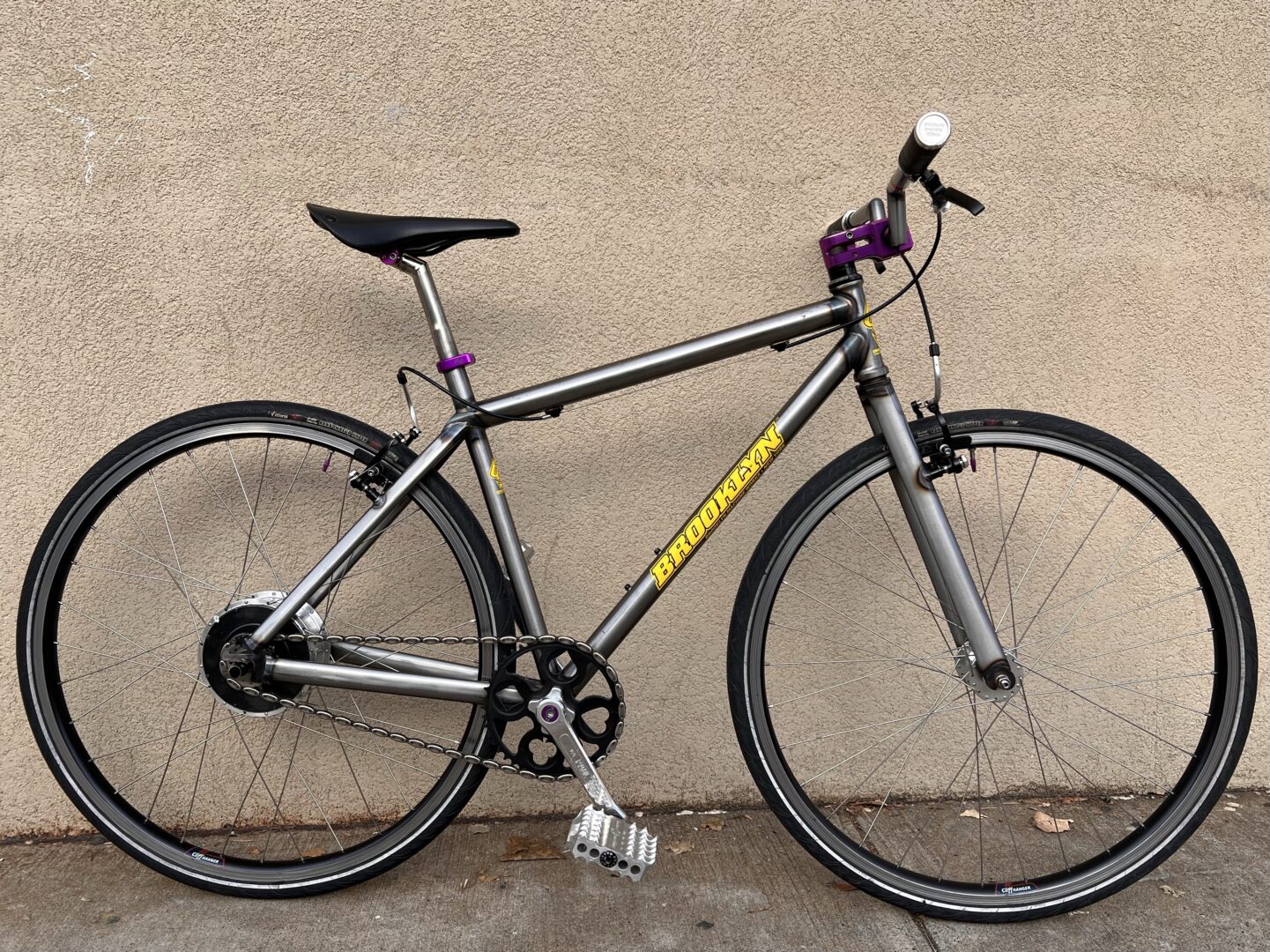 While these frames are available from King Kog in NYC, I imported mine used from Japan. The one above is my personal build, featuring a BMW headset, stem and bar-ends, Paul Components “Royal Flush” cranks, brake levers, and MiniMoto brakes, “Bat Bars” by Japanese brand Master Pista, and “shin burger” pedals by Brave Machine. The pedals are a copy of BMW’s original design; I have a set of those as well, but as they are valued over $800 a set, I use the Brave Machine version on the street. The wheelset is built from stout Velocity Cliffhanger rims, with a 500-watt Keyde P160 “All-in-One” e-bike hub in the back.
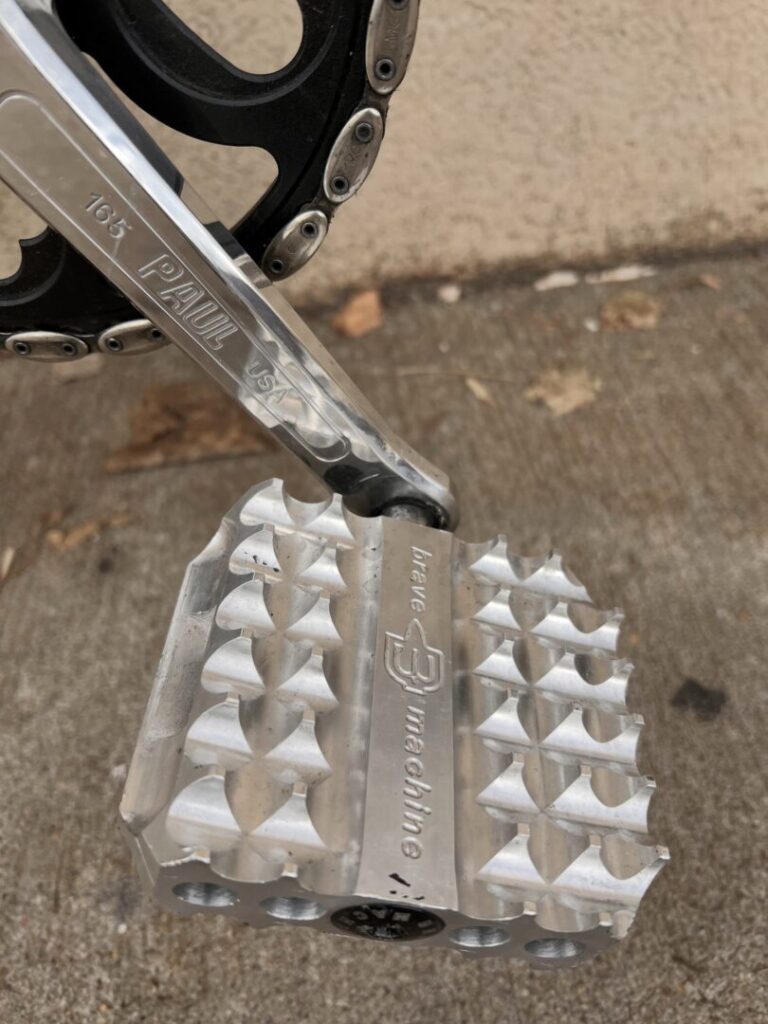
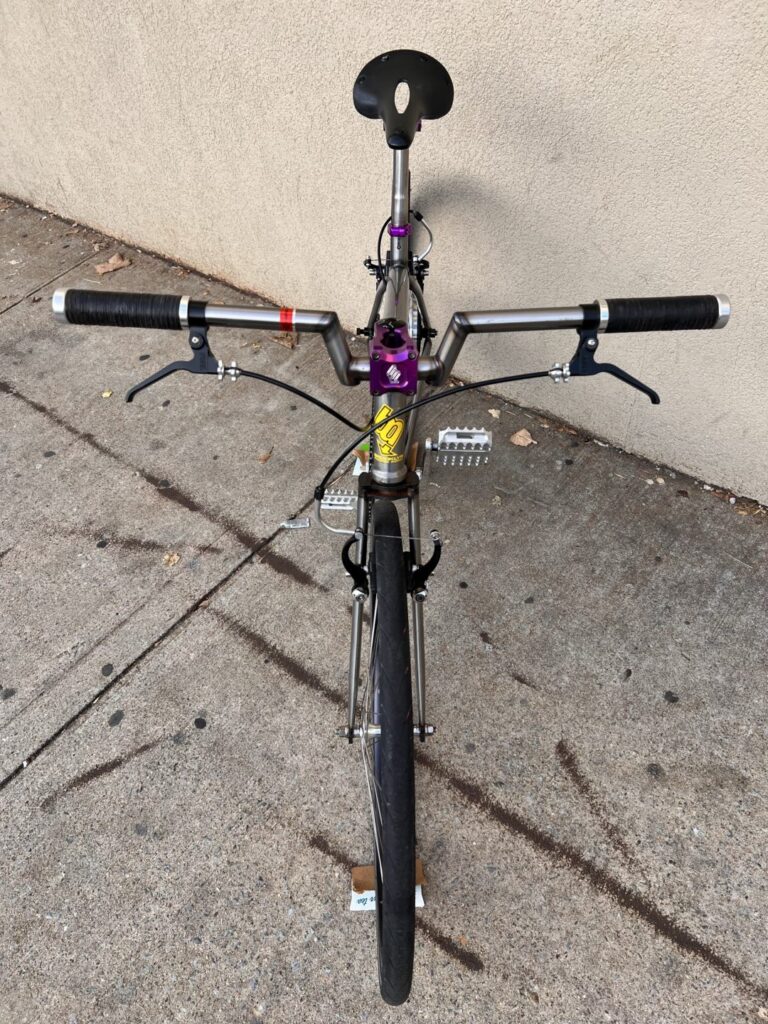
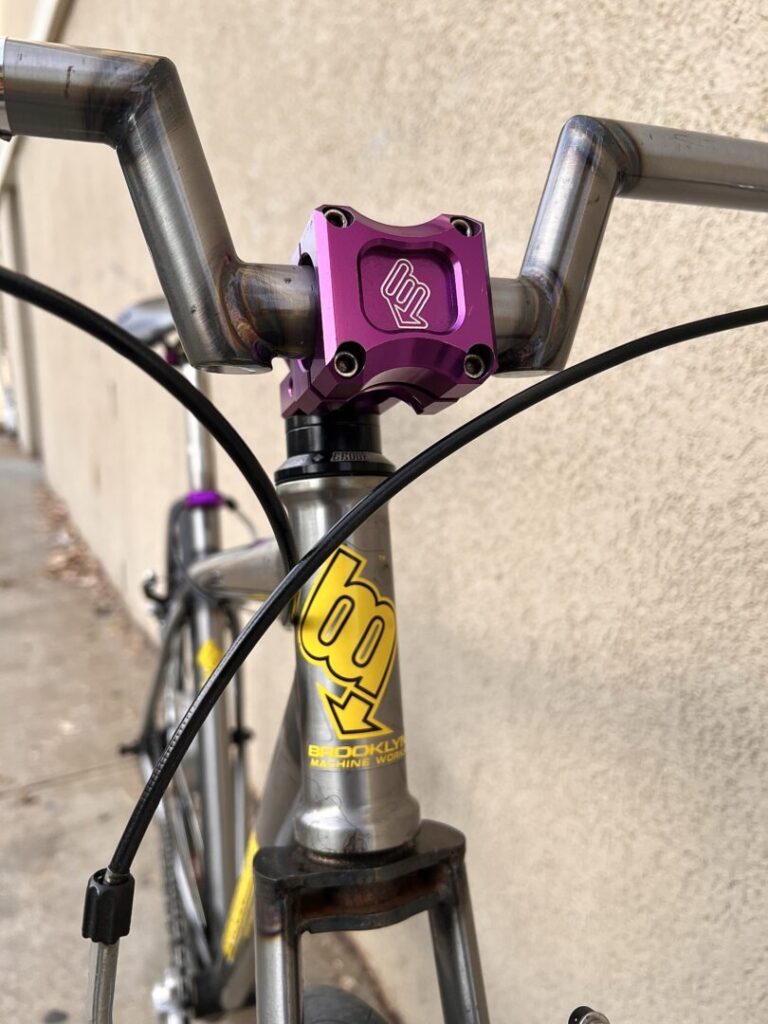
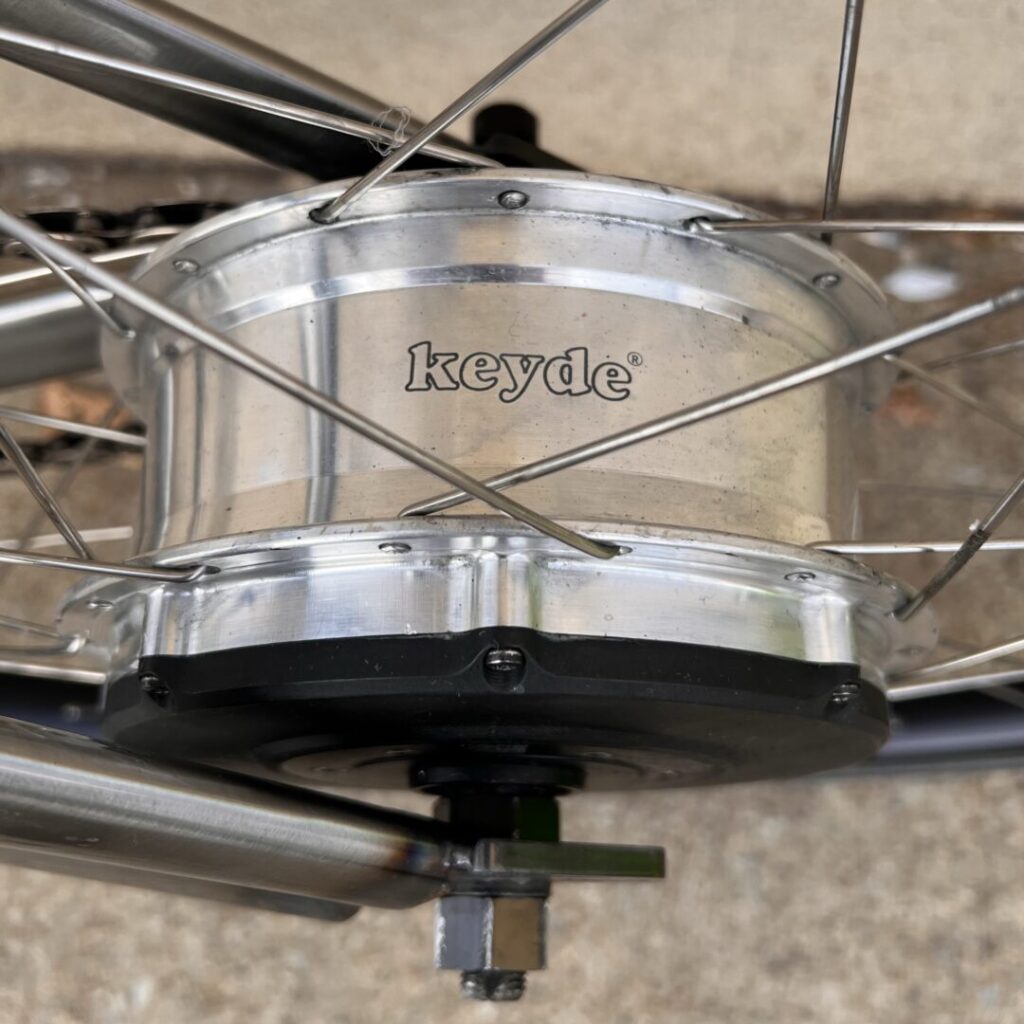
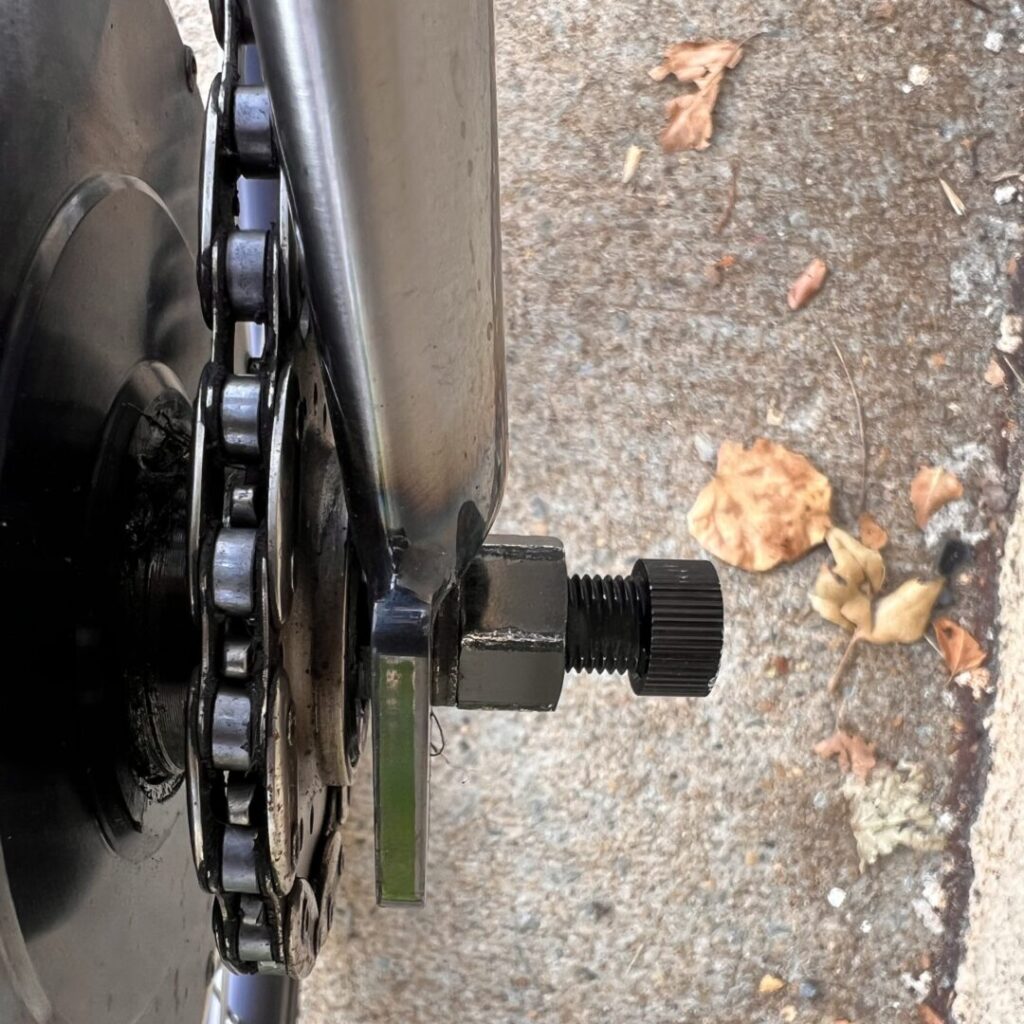
The Keyde motor has its batteries and controller built inside the hub, and is controlled via Bluetooth. You can use the Keyde app on your phone, or an external Bluetooth touch screen that can be mounted on your handlebars. No wires are needed; you simply build a wheel with the All-in-One, put the wheel on the bike and you now have an e-bike. The motor is powerful and good for about 25 miles on the high-output setting and 50+ on the “eco” setting. You charge it through a port in the drive-side axle, shown above in the right-hand photo, covered by a screw-on cap. I had several P160 motors custom-made by Keyde for track bikes, which involved using a shorter axle length (120mm) and replacing the freehub with a screw-on mount for a single-speed cog.
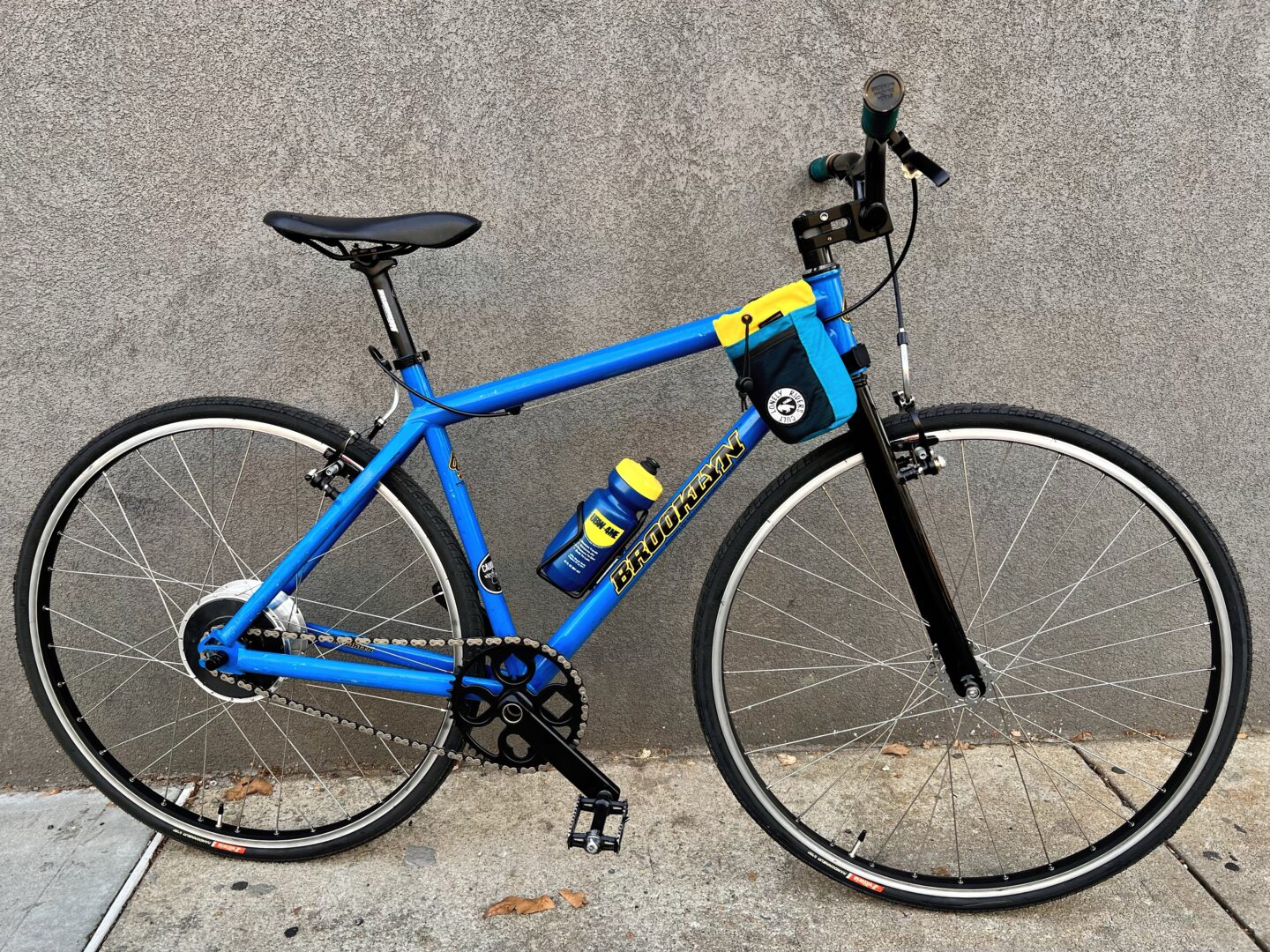
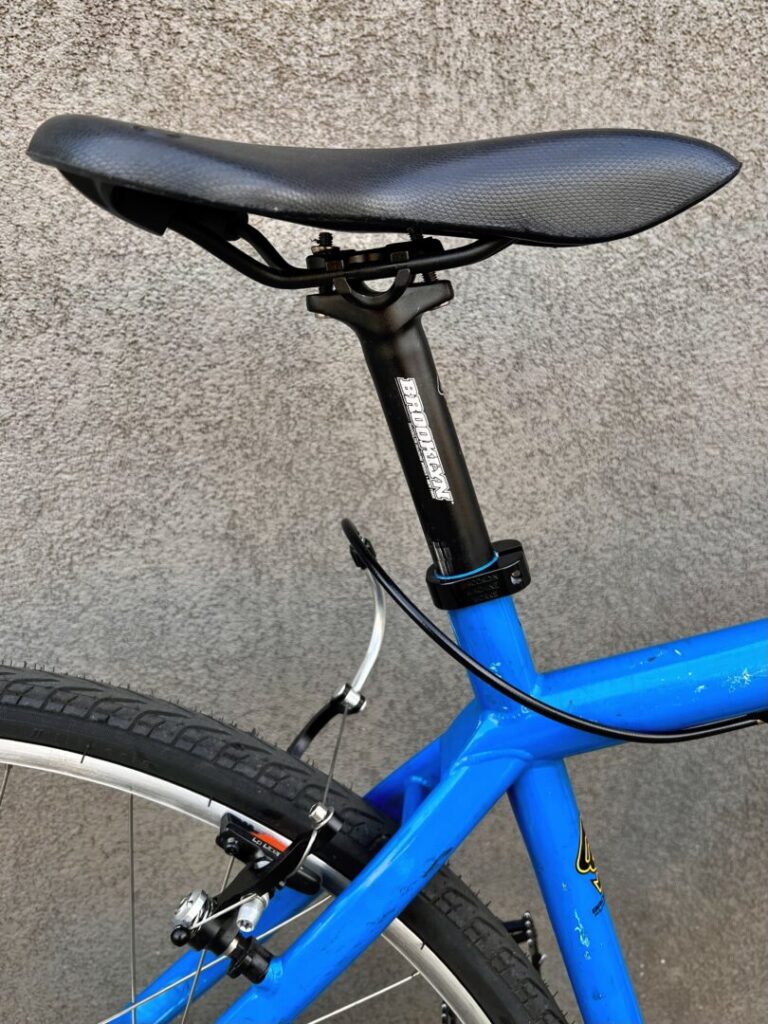
My wife’s blue BMW is a more recent build. It uses the same Paul Minimoto brakes and BMW headset, stem, seat post, seat post clamp, and bar ends. The wheelset uses Sun CR 18 rims. The pouch on the side holds her cellphone while riding.
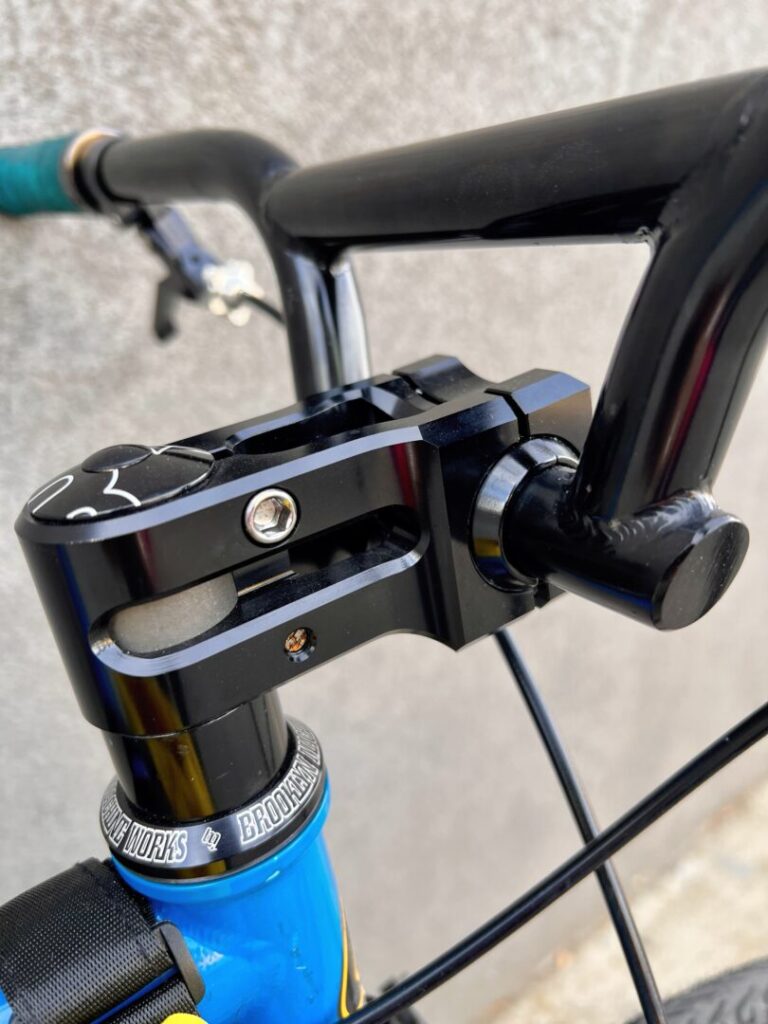
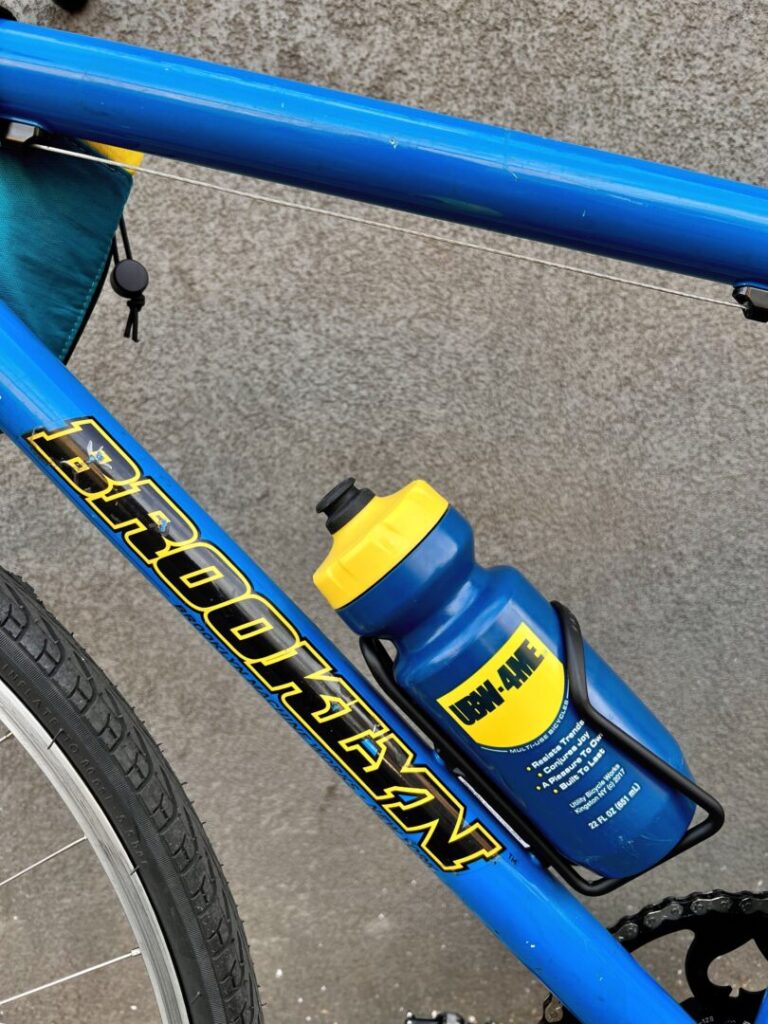
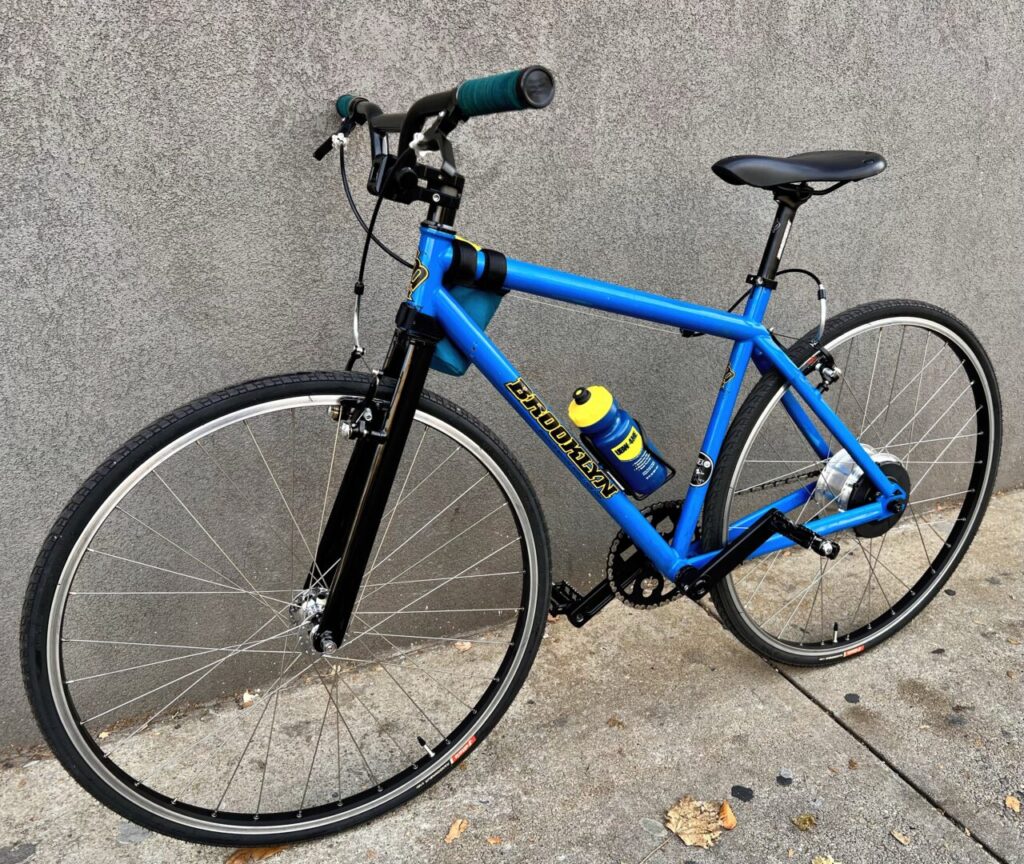 I jokingly call these my “mid-life crisis” bikes, as I finally got to build my own Gangsta Track bikes. I spared no expense in the process, using a mix of BMW parts and other iconic components. I’ve been riding mine for the past three years, and it gets compliments on the street wherever I go. Even though these bikes were made in Asia, I enjoy repping a true NYC brand that I have a personal connection with. What do you think? Let me know down in the comments!